
Recent plumbing jobs in London
Every photo on this page was taken by our engineers on real jobs. None of it is stock photography. We leave out addresses and anything that would identify the household, and we describe only what each photo shows.
If you have something similar going on, ring or WhatsApp 07861 933265 at any hour. There is no call-out fee, and the first hour is £110.
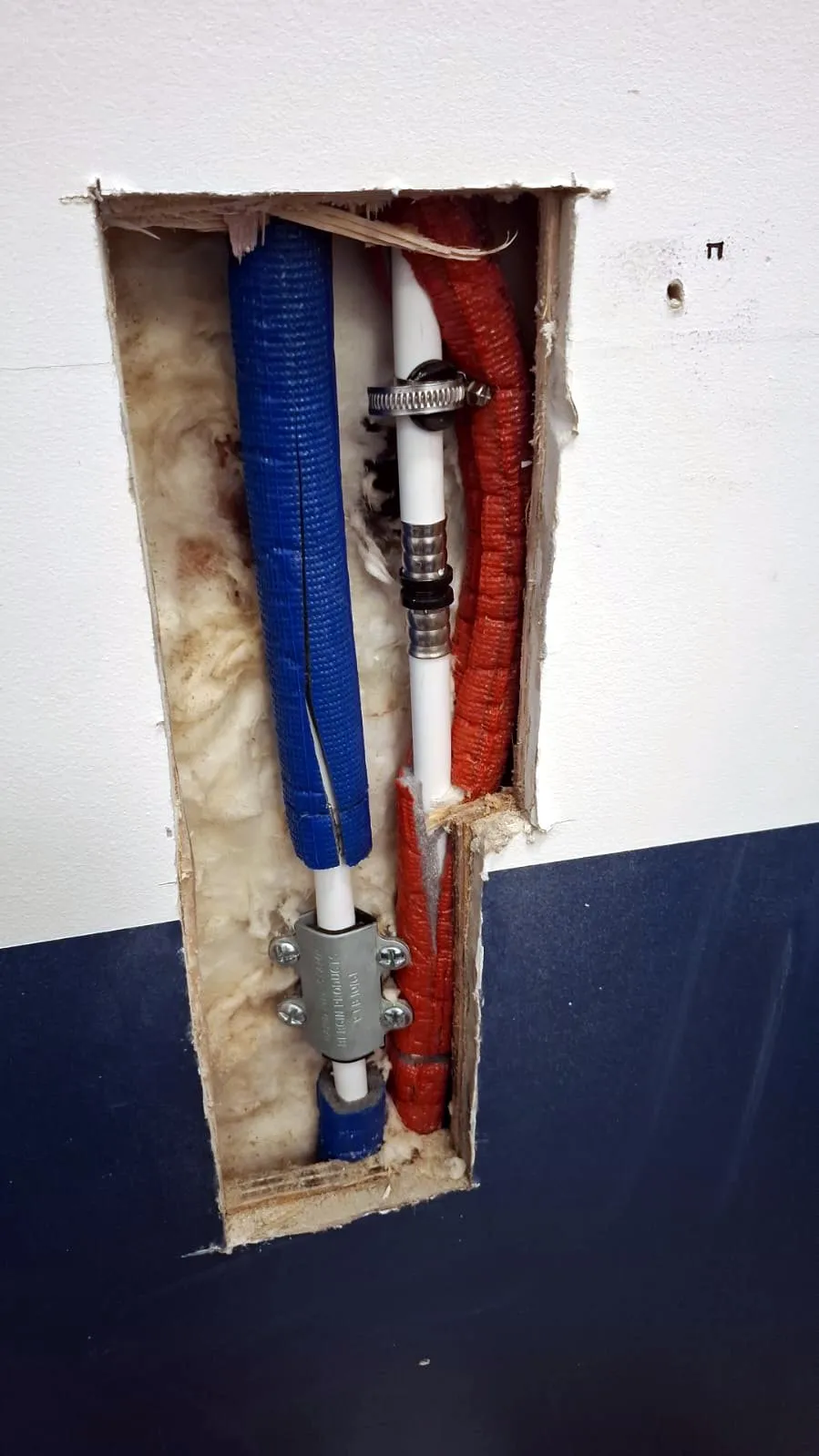
A hidden leak inside a stud wall
The plasterboard has been cut back to reach the pipes running inside the wall. You can see a repair clamp on the cold supply in its blue sleeve, and the insulation behind it stained brown where water had been seeping for a while before it showed on the surface. Cutting one neat panel in the right place is far cheaper to make good than opening up a whole wall, which is why we trace first and cut second. More on how we do that on our leak detection page.
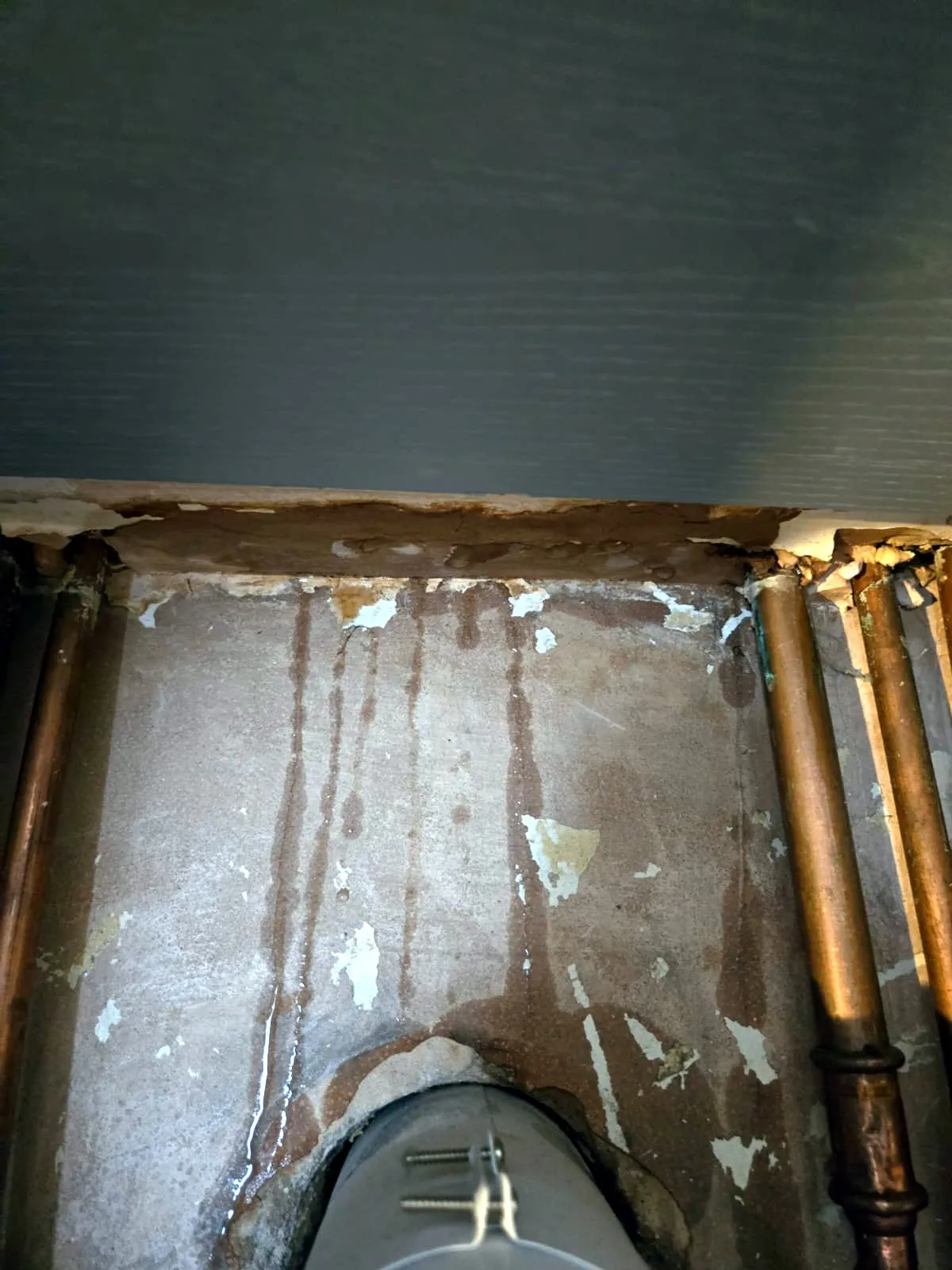
Water running down behind the boxing
This is the inside of the boxing behind a toilet, with the soil pipe at the bottom and copper pipes to the right. The brown tracks down the wall are old water runs: by the time a damp patch appears on the other side, water has usually been running like this for weeks. Our guide to finding a hidden water leak explains the usual suspects.
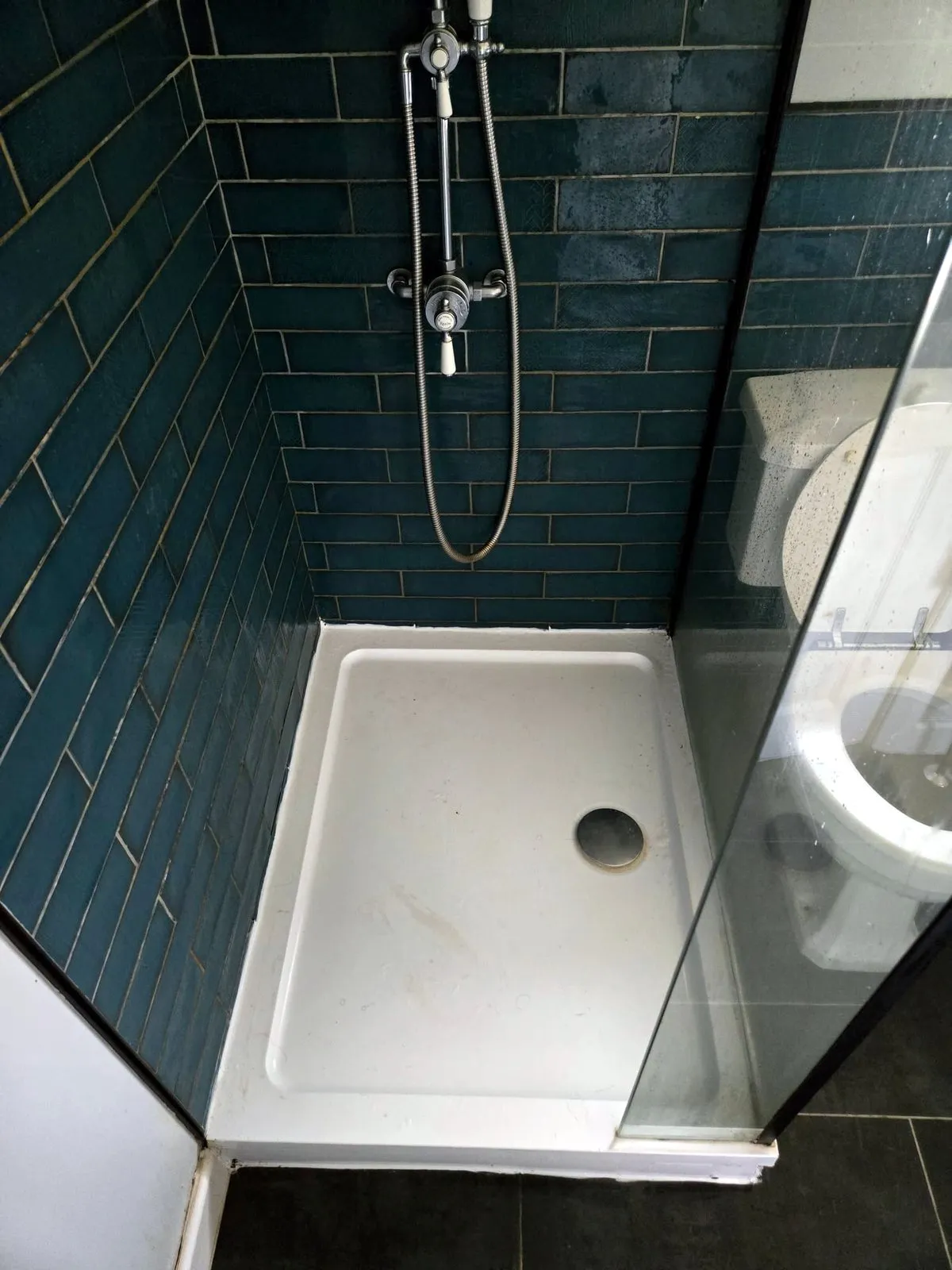
A shower tray and its seals
When water shows up below a shower, the joint where the tray meets the tiles, the waste under the tray and the valve behind the tiles are the three places to check. A failed silicone line can let water into the wall every time the shower runs, without a drop showing in the bathroom. See bathroom leak repair.
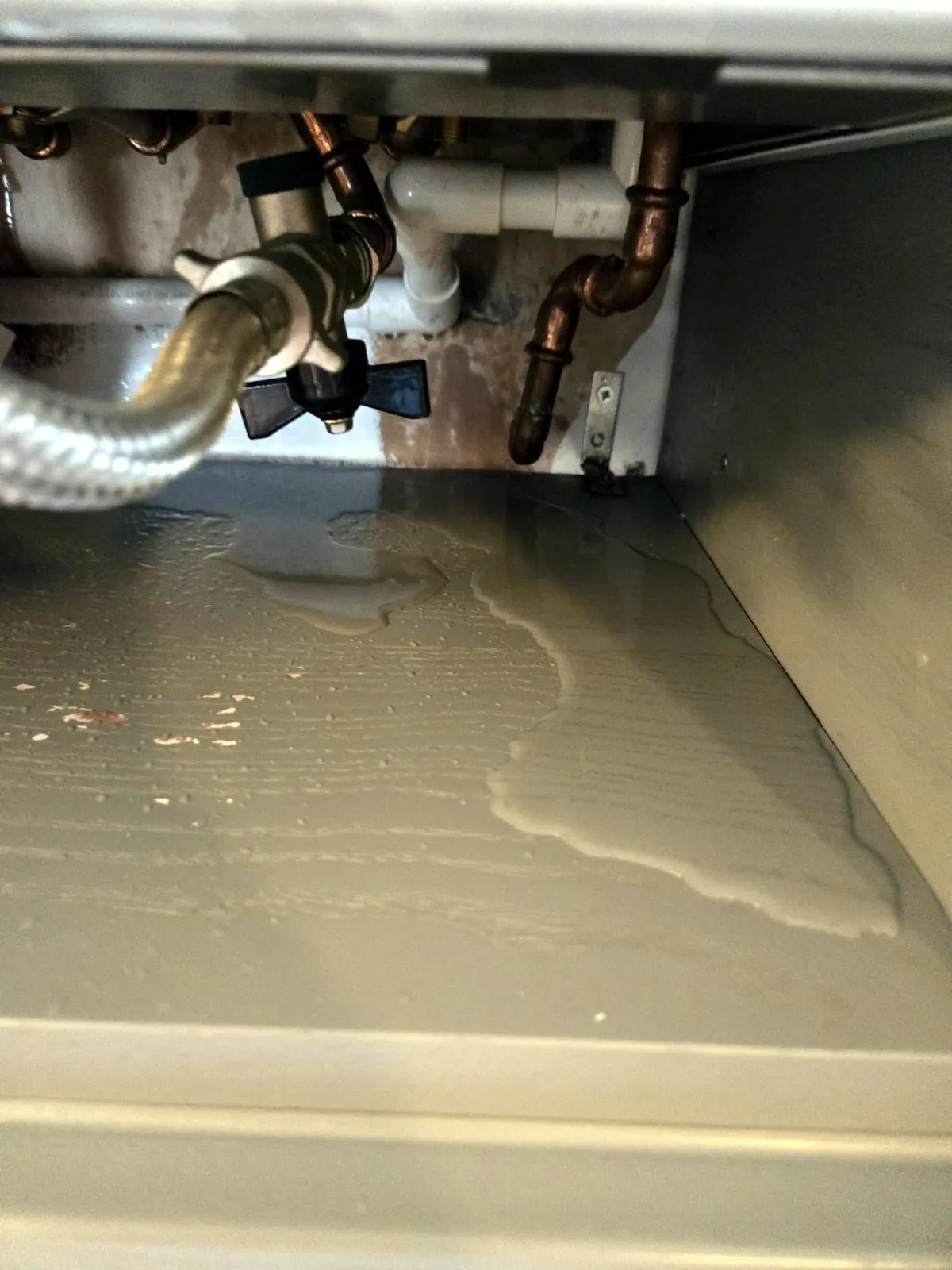
Water pooling in a cupboard under the pipework
A slow drip from a fitting or valve above lands on the cupboard base and spreads out, and the board soaks it up long before anyone notices. If you find water like this, turn off the isolating valve or the stopcock, take a photo, and send it to us on WhatsApp. See water leak repair.
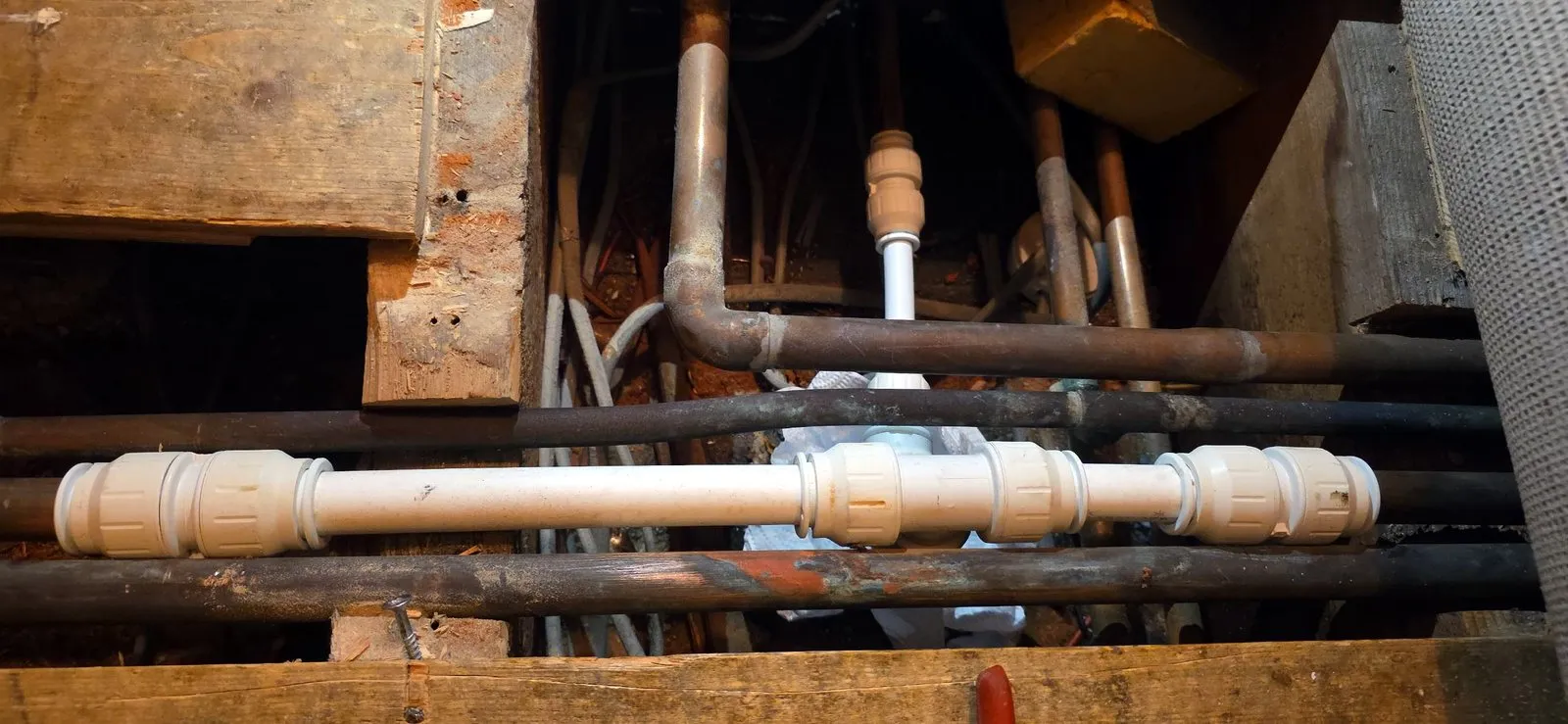
A pipe renewed under the floorboards
With the boards up you can see the old copper runs side by side and a new section in white push-fit pipe and fittings joined into them. Push-fit lets a section be renewed in a tight floor void without heat near the joists. See burst pipe repair and pipework replacement.
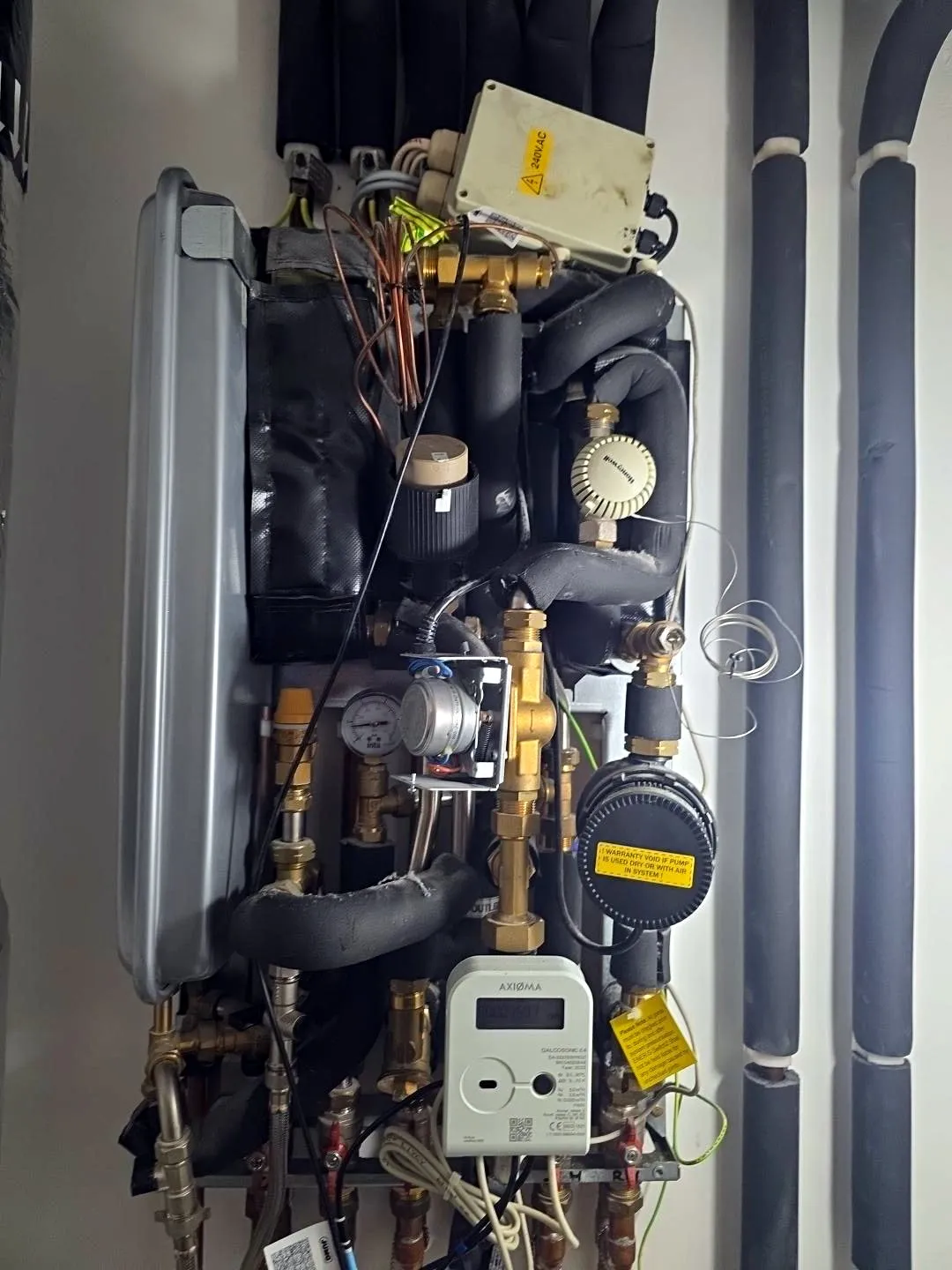
A heat interface unit in a flat on communal heating
Many newer London flats have no boiler: heat and hot water come from the building’s plant through a unit like this one, with its own heat meter, valves, pump and expansion vessel. When only one flat in a block loses hot water, the fault is usually here rather than in the plant room. See no hot water.
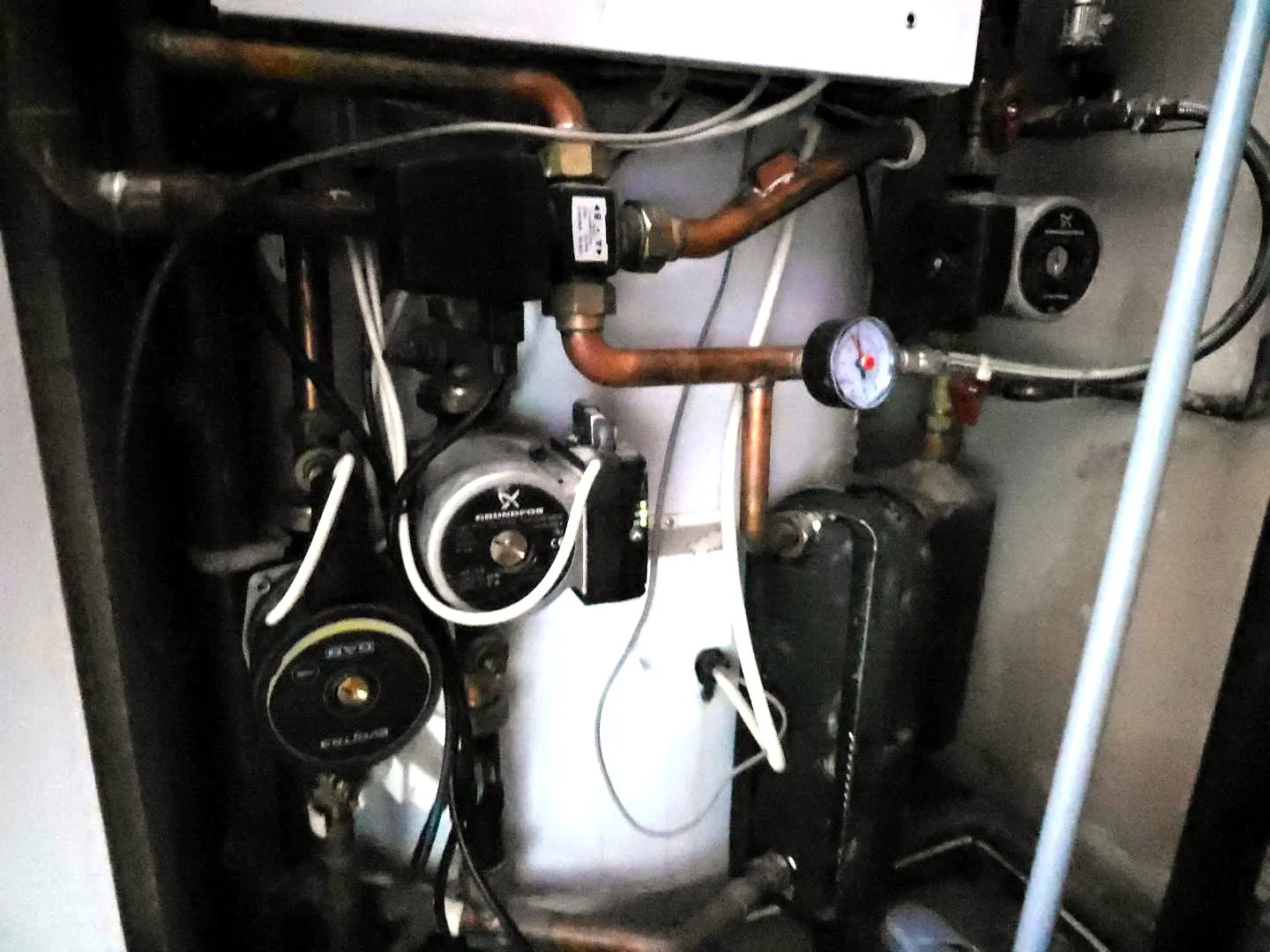
Inside a heating and hot water cupboard
Circulating pumps, a pressure gauge, valves and the hot water cylinder behind them. A pump that has seized or lost power is a common reason for radiators going cold while everything else seems to be running. See central heating repair.
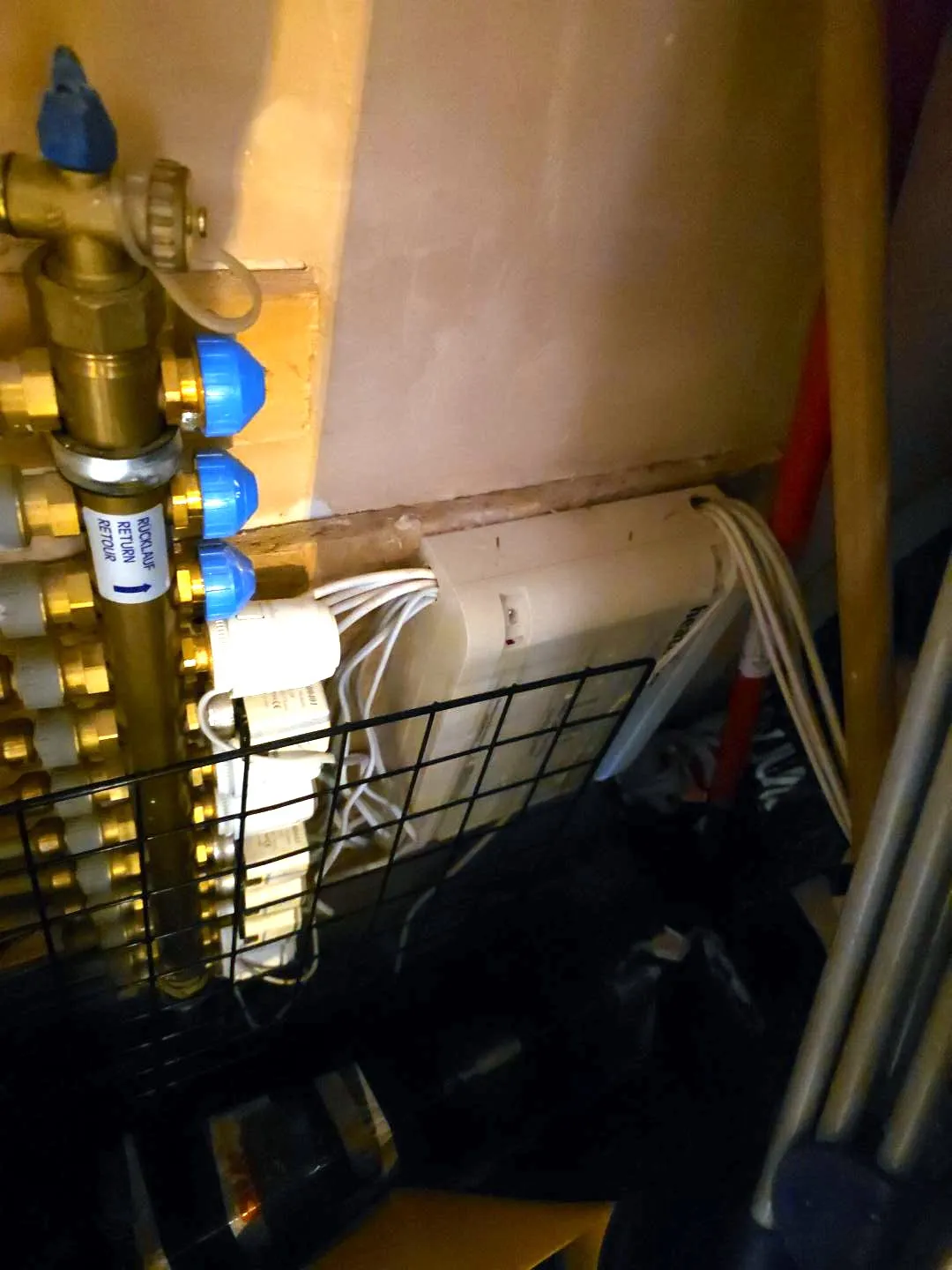
An underfloor heating manifold
The brass manifold feeds each heating loop, and the white heads on it are the zone actuators, wired back to the control box beside it. When one room stays cold while the others are warm, the actuator on that zone, or its wiring, is often the reason. See underfloor heating.
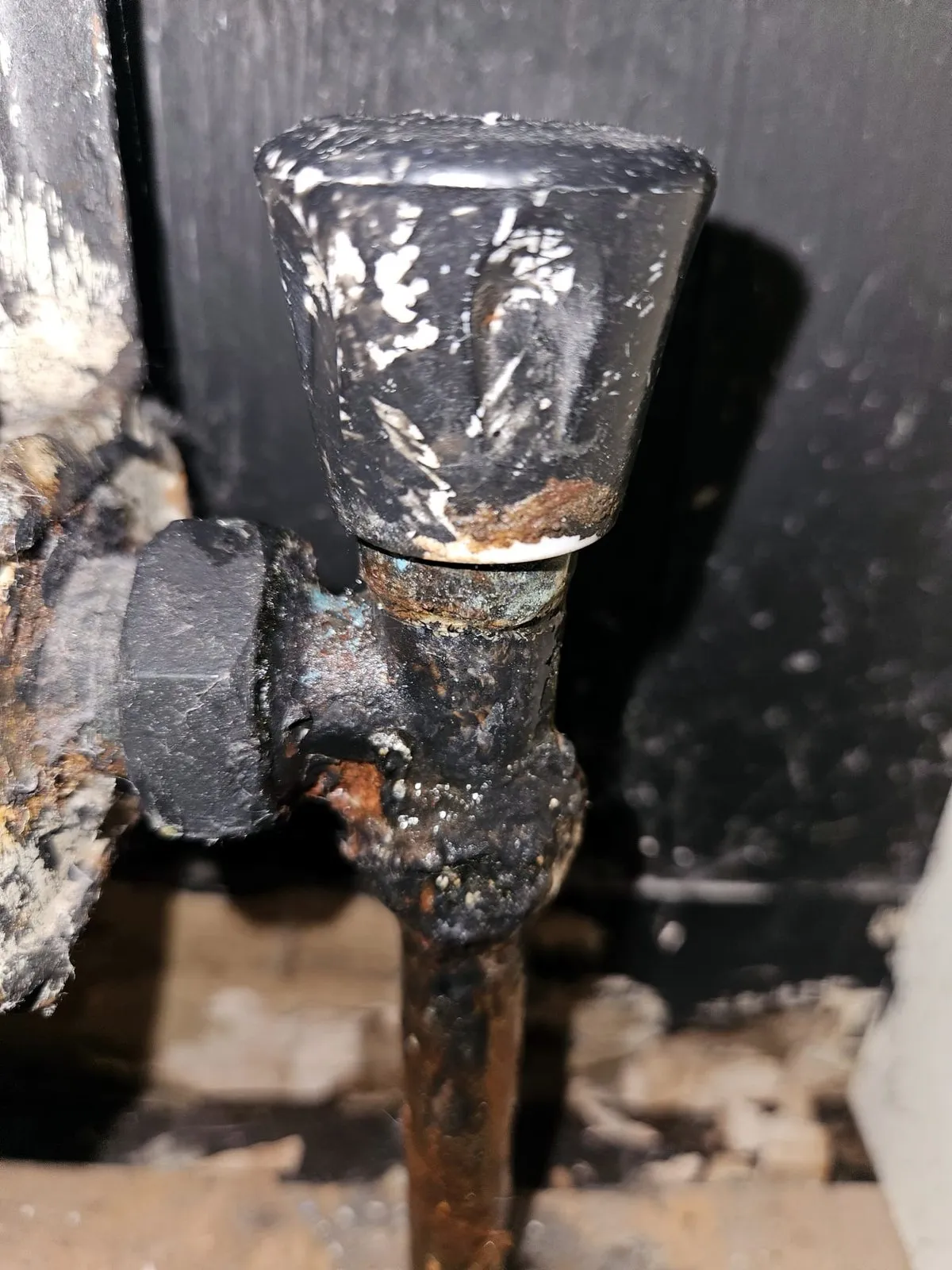
A corroded radiator valve
Years of slow weeping have crusted this valve and the pipe below it. A valve in this state is past saving, and the job is a new valve, ideally fitted without draining the whole system. See leaking radiator.
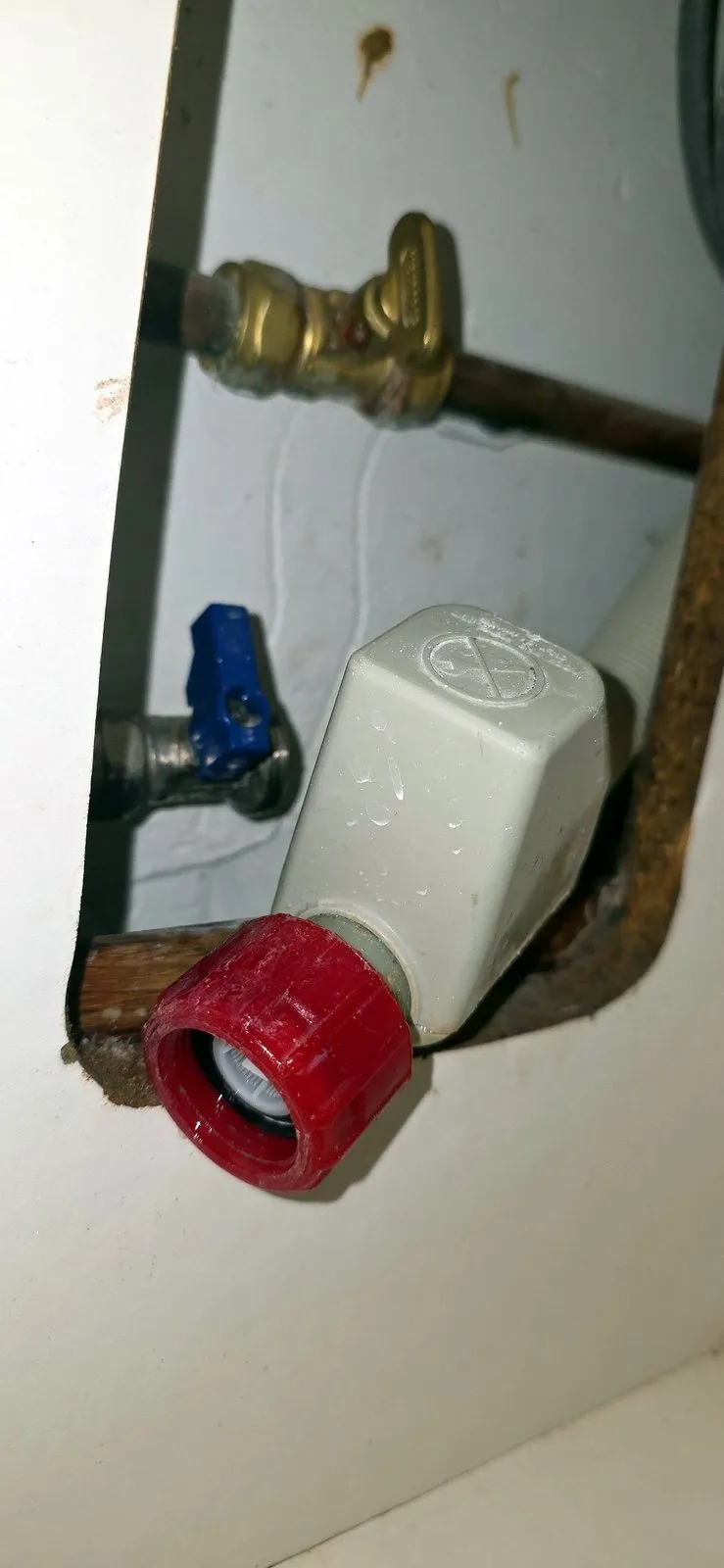
A washing machine supply and waste
The supply valve and waste connection sit in a cut-out behind the machine, out of sight. A weeping fitting here is one of the most common reasons for water appearing under a washing machine. Our guide covers a washing machine leaking from the bottom.
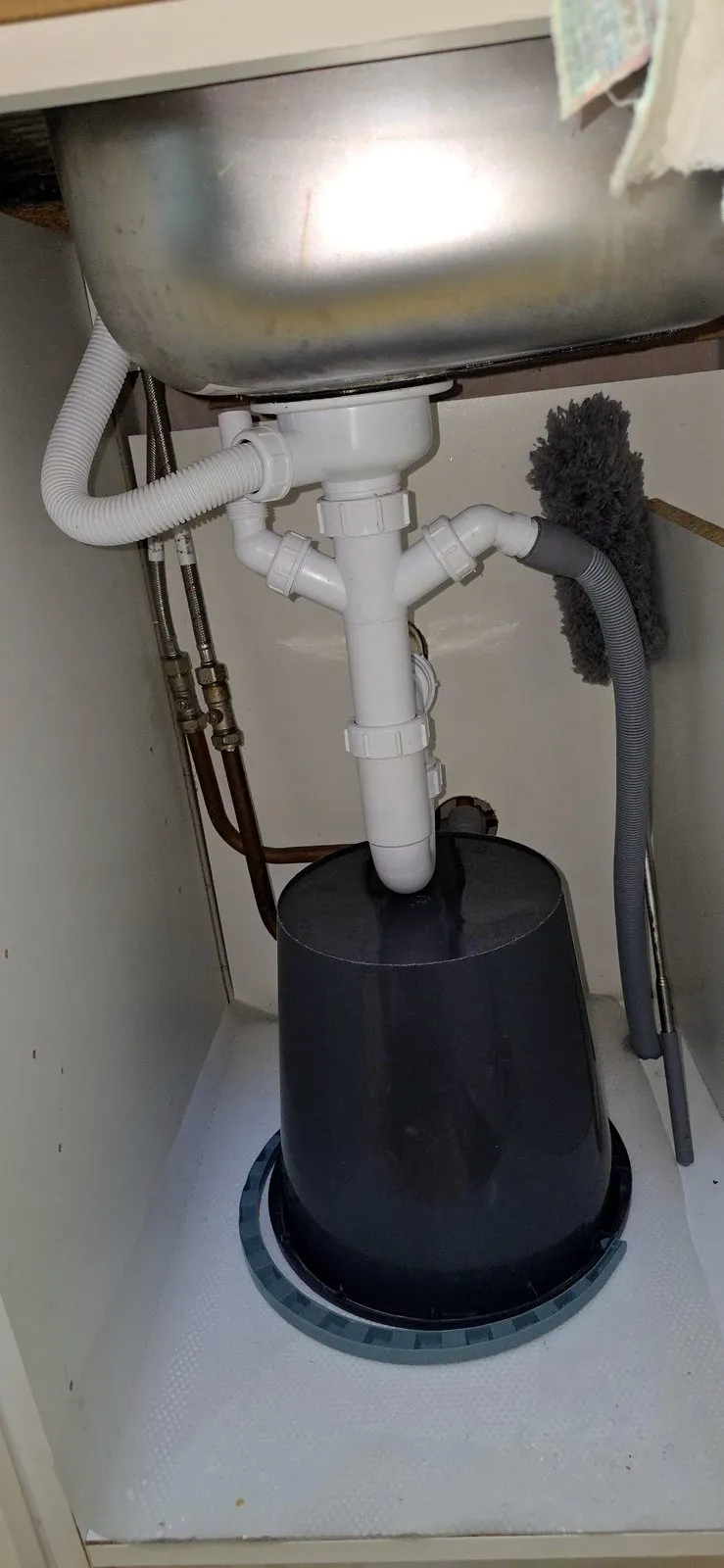
A kitchen sink waste with appliance connections
A double kitchen sink waste with the washing machine and dishwasher hoses on their own spigots above the trap, so neither can siphon dirty water back. See blocked sink.
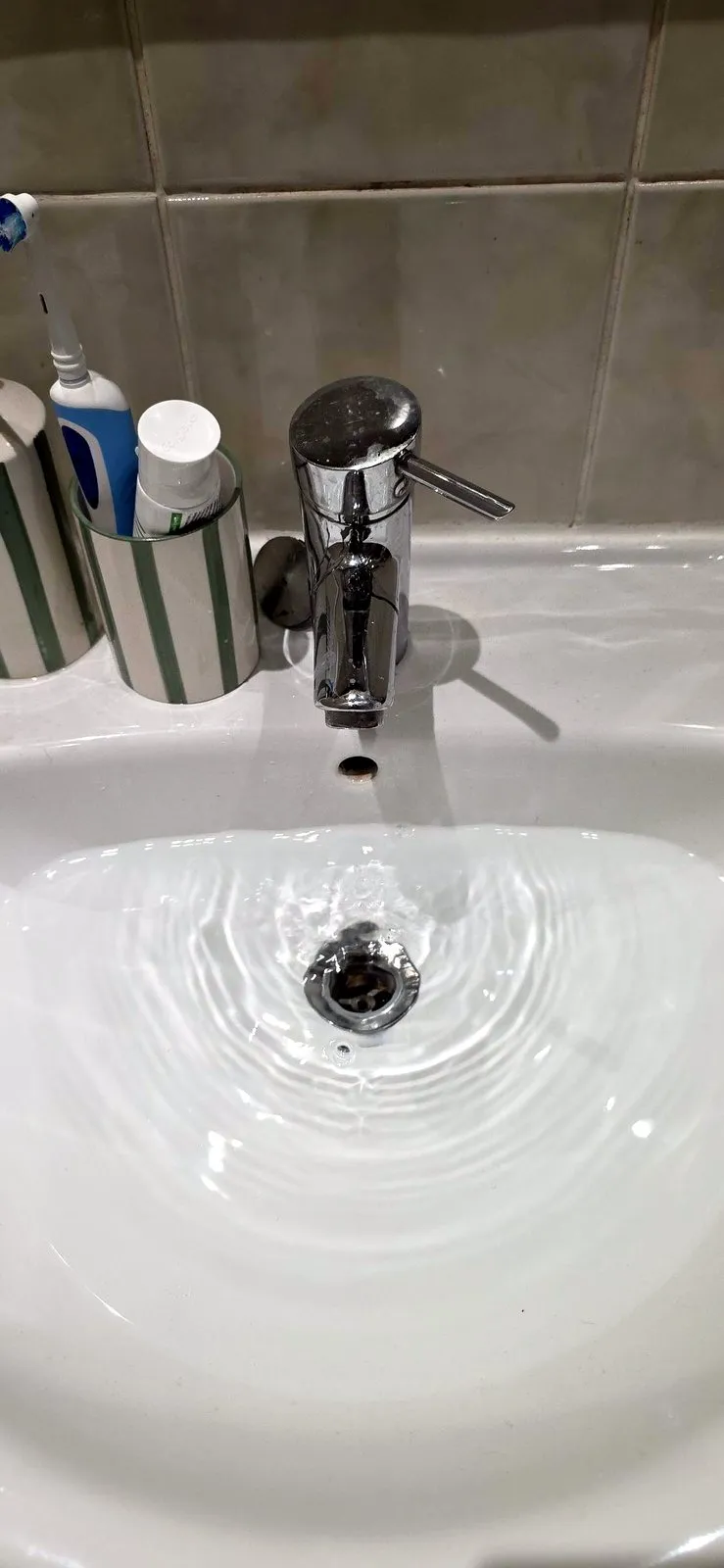
A basin mixer tap
A single-lever basin mixer running cleanly into the basin, with the waste clearing as it should. See tap replacement.
Seen something like this at home?
Most of these jobs start with a photo. Send yours on WhatsApp to 07861 933265 and an engineer will tell you what it looks like and whether it needs someone tonight. The rate is the same at any hour: see our prices.