
Low Water Pressure After a Water Meter Was Fitted?
By Emergency Plumb,
For years the shower was fine. Then the water company came, dug a little square hole in the pavement, fitted a meter, and since then the kitchen tap takes an age to fill a pan and the shower’s gone limp. It’s hard not to feel a bit hard done by, especially now you’re paying for every litre. The good news is it’s usually something simple that got missed.
Short answer: When water pressure drops after a meter is installed, the cause is usually a stop valve left partly closed, either your own stopcock inside or the one beside the new meter, or grit that came loose when the supply was turned off and on. Open your inside stopcock fully, clean any tap aerators and shower heads, and do a timed bucket test. If the flow is still poor, ask the water company to check the valve and meter in the pavement chamber, and get your own pipework looked at if they say their side is fine.
Why would a meter make the water weaker?
The meter itself is just a counter the water passes through. The trouble tends to come from the job around it:
- A valve not opened all the way. The meter chamber normally has its own stop valve. If that’s left part turned after fitting, every tap in the house loses flow.
- Your stopcock was used and not reopened. Sometimes a householder, or whoever was on site, turns the inside stopcock off to help, then only opens it halfway.
- Debris on the move. Turning the water off and back on can shake loose scale and grit, which then lodges in tap aerators, shower heads, the inlet filter on a combi or a valve washer.
- An old pipe disturbed. Many London streets still have old supply pipes, sometimes lead, between the pavement and the house. Digging next to one can expose how tired it is.
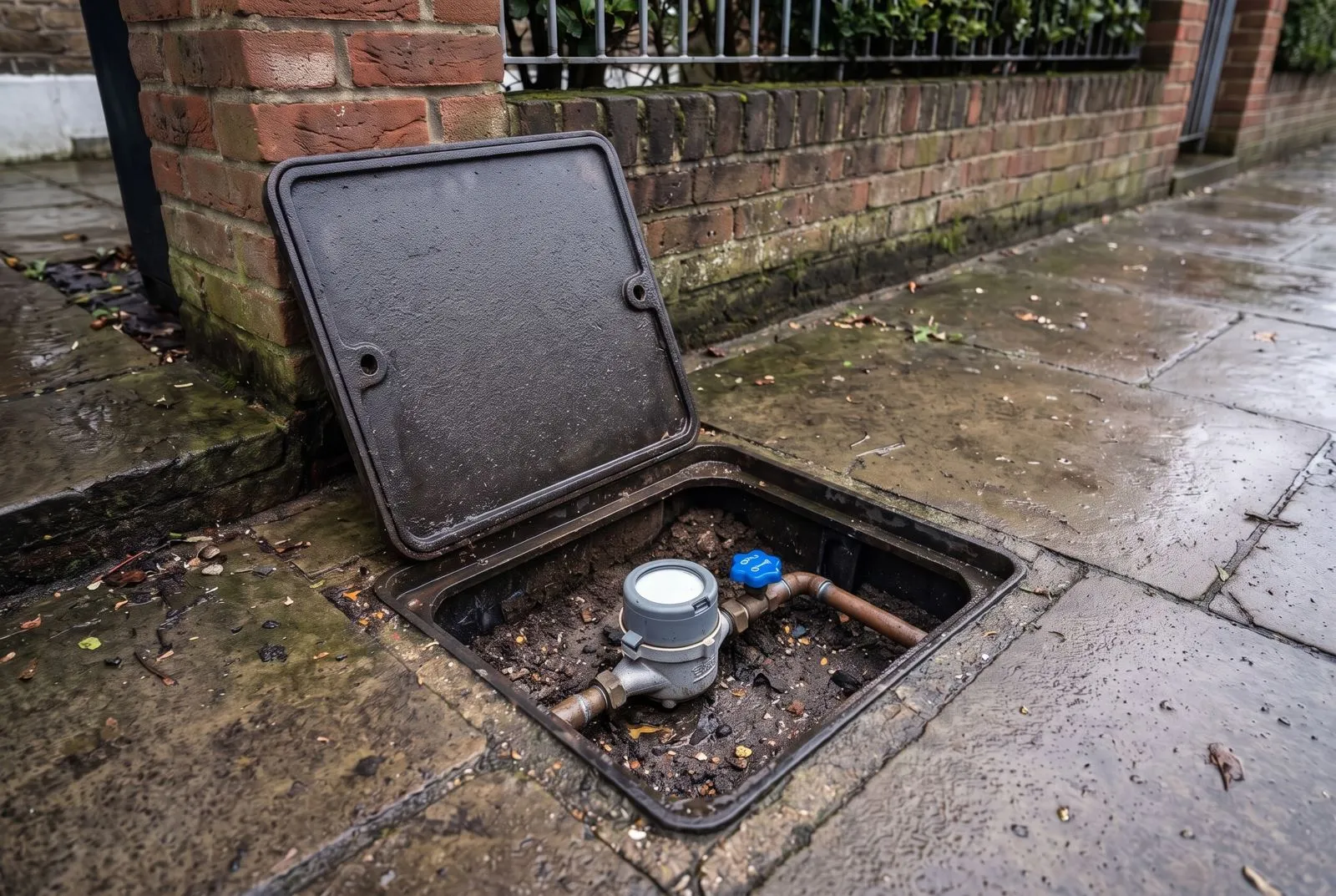
Illustration made with AI to show a water meter chamber in a pavement. It is not a photo of a real installation or of our work.
If your pipes have started banging since the meter went in, rather than just running weak, our guide to pipes banging after a water meter was fitted covers that side of things.
What can I check myself?
- Kitchen cold tap first. Thames Water suggests starting here, as it’s normally fed straight from the mains. If it’s strong but other taps are weak, the problem is inside your home.
- Open the inside stopcock fully. Thames Water’s advice is to turn it gently anticlockwise to make sure it’s fully open. Don’t force a stiff one.
- Unscrew and rinse aerators and shower heads. A blob of grit on a tap’s mesh can halve the flow.
- Ask the neighbours. If the people next door had meters fitted the same week and their water’s fine, it points to your supply or your pipework. If theirs is weak too, it may be the network.
- Do a timed bucket test. Time how long the kitchen cold tap takes to fill a measured bucket, and work out litres per minute. Write it down, with the date, so you can compare after any fix.
- Look for a leak. With every tap and appliance off, watch the meter for a minute or two. If it’s still turning, water is escaping somewhere between the meter and your taps, which also costs you money now.
What it usually is
| What you notice | Usual cause |
|---|---|
| Every tap weak since the day of fitting | Stop valve at the meter or inside left part closed |
| Just one or two taps weak | Grit in an aerator, shower head or valve |
| Combi hot water poor, cold fine | Debris in the boiler’s inlet filter |
| Meter turning with everything off | A leak on your side of the meter |
| Neighbours’ water weak too | A network problem for the water company |
Who fixes it: the water company or a plumber?
Ofwat explains that water companies have to keep a minimum pressure of seven metres static head in the communication pipe serving your property, and that they can take pressure and flow measurements if you ask. So if the drop started on fitting day and your stopcock is open, contact the water company first, give them the date, and ask them to check the valve and meter in the chamber.
If they confirm their side is fine, the issue is on your pipework, from the boundary to your taps. That’s where we come in: we test the flow at the stopcock, track down part-closed or failing valves, clear debris from fittings, and check for leaks. If your stopcock is past saving, stopcock replacement is a quick job. Where an old supply pipe is the bottleneck, our guide to low water pressure in the house explains the options.
We charge by the hour with no call-out fee: £110 for the first hour, £45 per half hour after, plus parts. Full details are on our prices page.
No water at all?
If the taps have gone from weak to nothing, check with the neighbours, then call or WhatsApp 07861 933265. Our 24-hour emergency plumbers cover London and the M25 towns and usually reach you in 60 minutes. You can find everything else we handle on our emergency plumber in London page.
Questions people ask
Can a water meter reduce water pressure?
A working meter shouldn't make a big difference on its own. What usually changes things is the work around it: a stop valve in the meter chamber not opened fully afterwards, grit loosened when the water went off and on, or an old supply pipe disturbed while the meter went in. Those can all leave you with a weaker flow.
Who do I contact if the pressure dropped after the meter was fitted?
If the drop started the day the meter went in and your inside stopcock is fully open, tell the water company and give them the date. Ofwat says water companies can take pressure and flow measurements. If they find the supply to your boundary is fine, the problem is in your own pipework, and that's a job for a plumber.
Is there a minimum water pressure the water company must give?
Yes. Ofwat explains that under the guaranteed standards scheme, water companies must keep a minimum pressure of seven metres static head in the communication pipe serving your home. That's measured on their pipe, not at your taps, so pipework inside your property can still reduce what you get.
Can I open the valve in the meter chamber myself?
The meter and the valve in the pavement box belong to the water company, so it's best to ask them to check it. You can safely check your own inside stopcock, usually under the kitchen sink, which Thames Water suggests making sure is fully open.
How much does a plumber charge to investigate?
We don't charge for coming out. It's £110 for the first hour, then £45 for each extra half hour, plus any parts, and the price is the same day or night.
Sources
- No water or low pressure, Thames Water
- What is water pressure?, Ofwat