
Water Leaking From a Light Fitting: Stay Safe, Then Stop It
By Emergency Plumb,
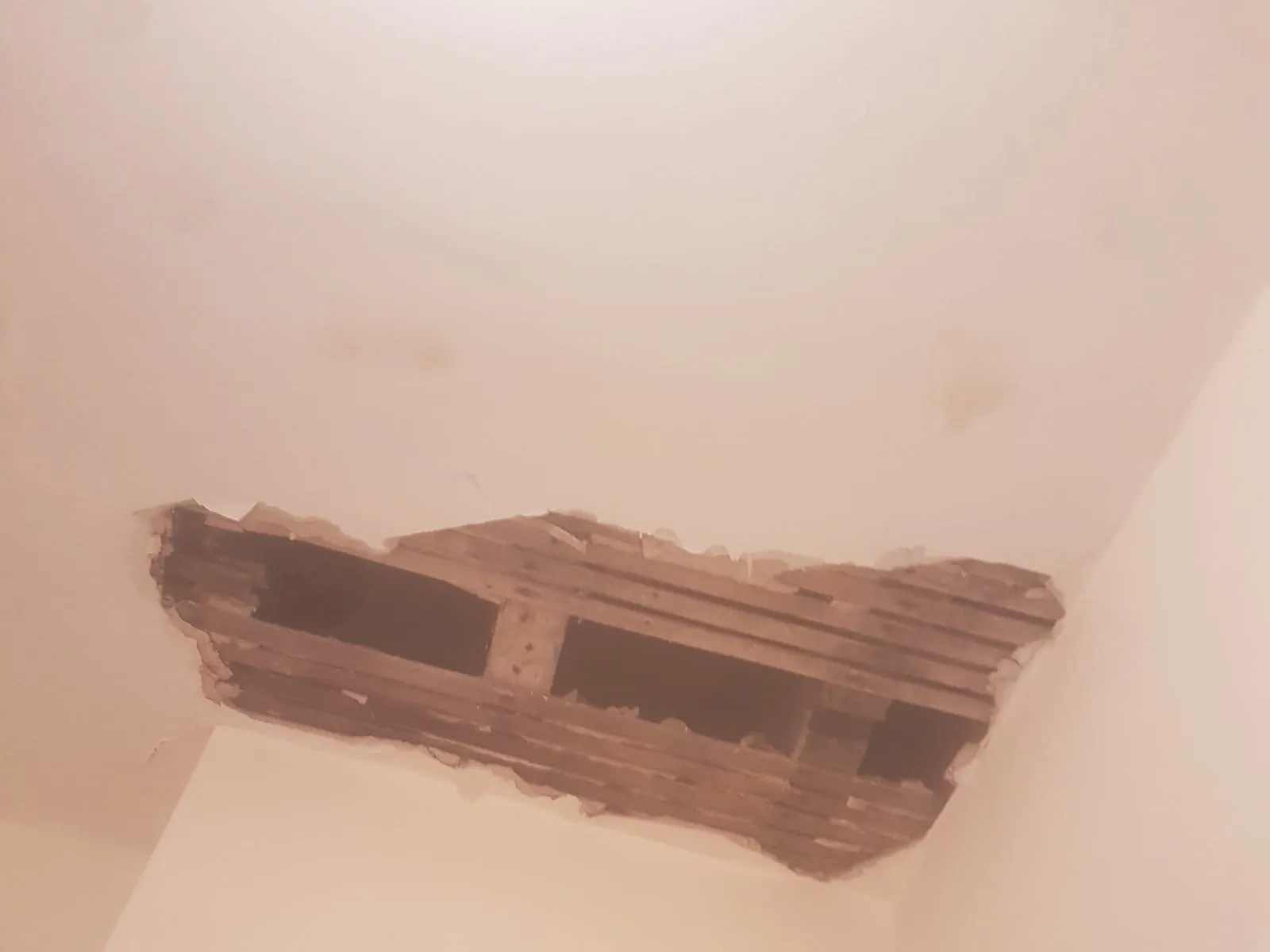
A drip landing on the kitchen worktop is annoying. The same drip coming out of a ceiling light is a different problem, because the water is now running past live wiring. The leak itself is often small, but the order you deal with it in matters more than the speed.
First, the electrics: do not touch the light switch. Go to the consumer unit, switch off the lighting circuit for that floor, and if you are not sure which it is, switch off the main switch. Use a torch or a phone light from then on.
The safe order, step by step
- Power off at the consumer unit, as above. If the consumer unit itself is wet, leave it and call us.
- Water off. Close the main stopcock, usually under the kitchen sink. If the leak is from a hot pipe, also switch off the boiler or immersion heater.
- Drain the pipes. Open the cold taps on the lowest floor to let the remaining water run out, and flush the toilets once.
- Catch it. Put a bucket under the light, and towels around it. Move furniture and electrical items out of the way.
- Watch the ceiling. If the plaster sags or bulges, leave the room and shut the door. Tell us about it when you ring.
- Call or WhatsApp 07861 933265 with a photo of the ceiling and, if you can, of the room above.
Where the water usually comes from
Look at what sits directly above the light.
- A bathroom: a leaking shower tray seal, a waste joint under the bath, or a toilet pan connector. These often only leak when the fitting is in use, so the drip may stop after a few minutes and come back with the next shower.
- A radiator or heating pipe under the floor: constant, and warm if you touch the water.
- A flat above you: see our guide to a leak from the flat above for how to contact them and their landlord or managing agent.
- The loft: a tank overflowing, a split pipe after frost, or a roof leak in heavy rain. Rain-related drips that stop when the weather does are a roofer’s job.
What not to do
- Do not take the light fitting down to “let it drain”. The wires behind it are still there.
- Do not poke a hole in the ceiling around the light. If the plaster needs draining, we do it with the power off and the room prepared.
- Do not turn the power back on to check whether the light still works.
What happens when we arrive
The engineer confirms the circuit is off, then traces the leak from the room above, starting with the fittings in a line above the light. Bathroom leaks are found by running each appliance in turn while someone watches the ceiling. Hidden pipe leaks under floors are tracked down with moisture meters and, where needed, thermal imaging, so floorboards come up in one place rather than five; our leak detection page explains the methods. Once the leak is repaired, we tell you so you can arrange an electrician to check the fitting before the circuit goes back on.
After the leak
Leave the ceiling to dry with the room ventilated for at least a few days. A ceiling that stayed flat usually only needs a stain-block primer and a coat of paint. Where water pooled for hours, plasterboard can soften and need replacing. Our page on water leaking through a ceiling covers drying and insurance in more detail.
Questions people ask
Is it dangerous if water is coming through a light?
Yes. Water and mains electricity in the same fitting can cause shocks, short circuits and, in a soaked ceiling, a fire risk. Do not touch the switch, the fitting or the bulb. Turn off the lighting circuit at the consumer unit, or the main switch if the circuits are not labelled, and keep everyone out of the room.
Can I use the light once it has dried out?
Not until an electrician has checked it. Water leaves residue inside fittings and junction boxes that can track current long after the surface looks dry, and spotlights with transformers are especially vulnerable. Plumbers fix the leak; an electrician signs off the circuit.
Why is the water coming through the light and not the ceiling itself?
A light fitting is a hole in the plasterboard. Water spreading across the top of the ceiling finds the lowest opening and drains through it, so lights, spotlights and smoke alarms are often the first place it shows.
How much will it cost to find and fix the leak?
There is no call-out charge. It is £110 for the first hour and £45 for each half hour after that, plus parts, the same at night as during the day.