
Water Leaking Through Your Ceiling in London? Do This First
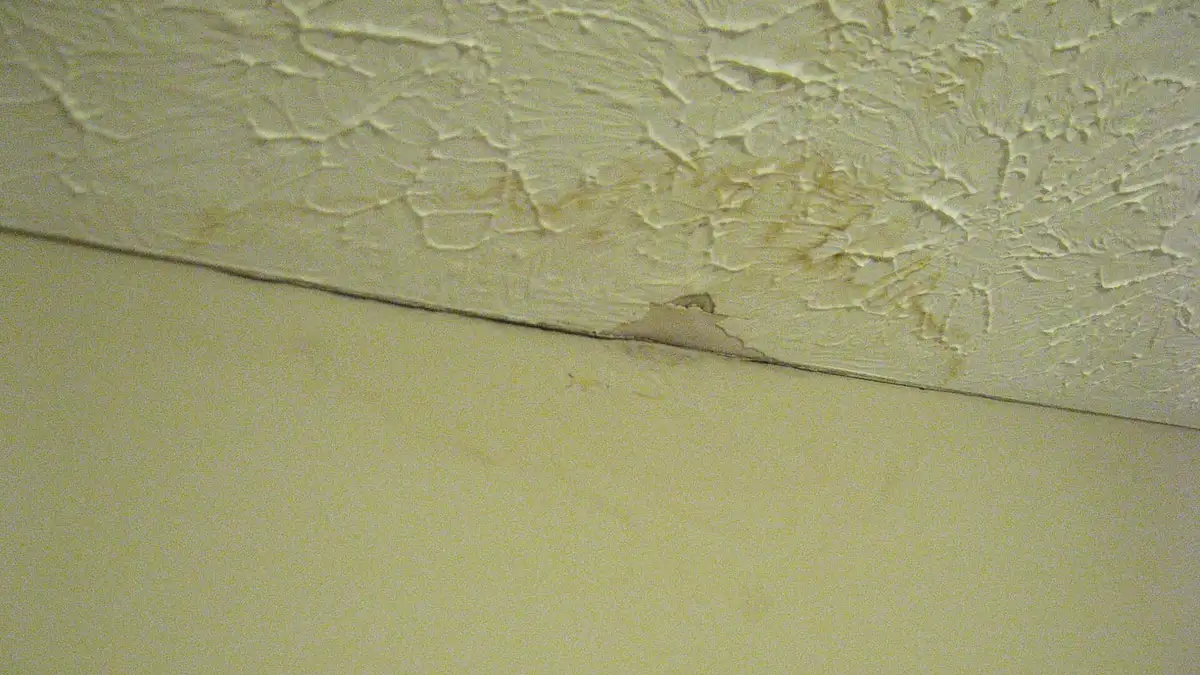

Water through a ceiling means a live leak above it, a pipe, a bathroom, a tank or the roof.
The ceiling itself is the last thing to worry about; the job is stopping the source before the plasterboard gives way.
Water through the ceiling in London: do this now, while you wait
-
Turn off the water at the stopcockIf the drip slows over the next few minutes, the source is your plumbing, and now it’s controlled.
-
Kill the lights below the leakWater tracks along joists to light fittings. Switch the circuit off at the consumer unit, not just the wall switch.
-
Pierce the bulgeIf the ceiling is bellying, put a bucket underneath and make one small hole with a screwdriver to drain it in a controlled way. A pierced ceiling is a patch; a collapsed one is a new ceiling.
-
Photograph everythingStain, drips, damage below, your insurer will want the sequence.
What causes water through the ceiling in London
- Bathroom above. Failed sealant, a leaking waste, or a toilet pan seal, the most common source, and it only shows when someone showers.
- Pipework in the void. A weeping joint can drip for weeks before the stain appears; the wet patch is rarely directly under the leak.
- Tank overflow. A stuck float valve in a loft tank sends water over the top and through the bedroom ceiling below.
- Flat roof or gutter. If the stain grows when it rains and not when you bathe, the water is coming from outside, different trade, and we’ll say so.
Local conditions we work around
In a converted London flat a ceiling stain is usually somebody else’s plumbing. Purpose-built mansion blocks and Victorian houses split into flats run shared risers and stacked bathrooms, so the source is often one or two floors above and the leak has tracked along a joist before appearing. That changes the first job from repair to proof, we trace and document the source, because a freeholder, a managing agent and two insurers will all want to know whose pipe it was before anyone pays for the plaster.
Where we work in London
Wherever you are in the list below, the price is the same. Open your area for what tends to go wrong there.
Questions people ask
The drip stopped, is it over?
No. The void above the ceiling holds water and the source is still there. A stopped drip means the reservoir emptied or the leak is intermittent (a shower leak only leaks when someone showers). It needs finding either way.
Do you have to cut my ceiling open?
Usually a small, neat inspection hole at the point our detection kit indicates, not exploratory demolition. We agree where before cutting, and the hole is sized for a standard patch repair.
Whose problem is it in a flat?
The leaseholder above is responsible for their pipework; the building's insurer usually handles shared stacks. Our report states the source explicitly, which is what settles those conversations.
What does it cost?
There is no call-out charge. It is £110 for the first hour, then £45 for each additional half hour, plus the cost of parts, and the same at any hour of the day or night.