
Airlock in Cold Water Pipes: Causes and How to Clear It
By Emergency Plumb,
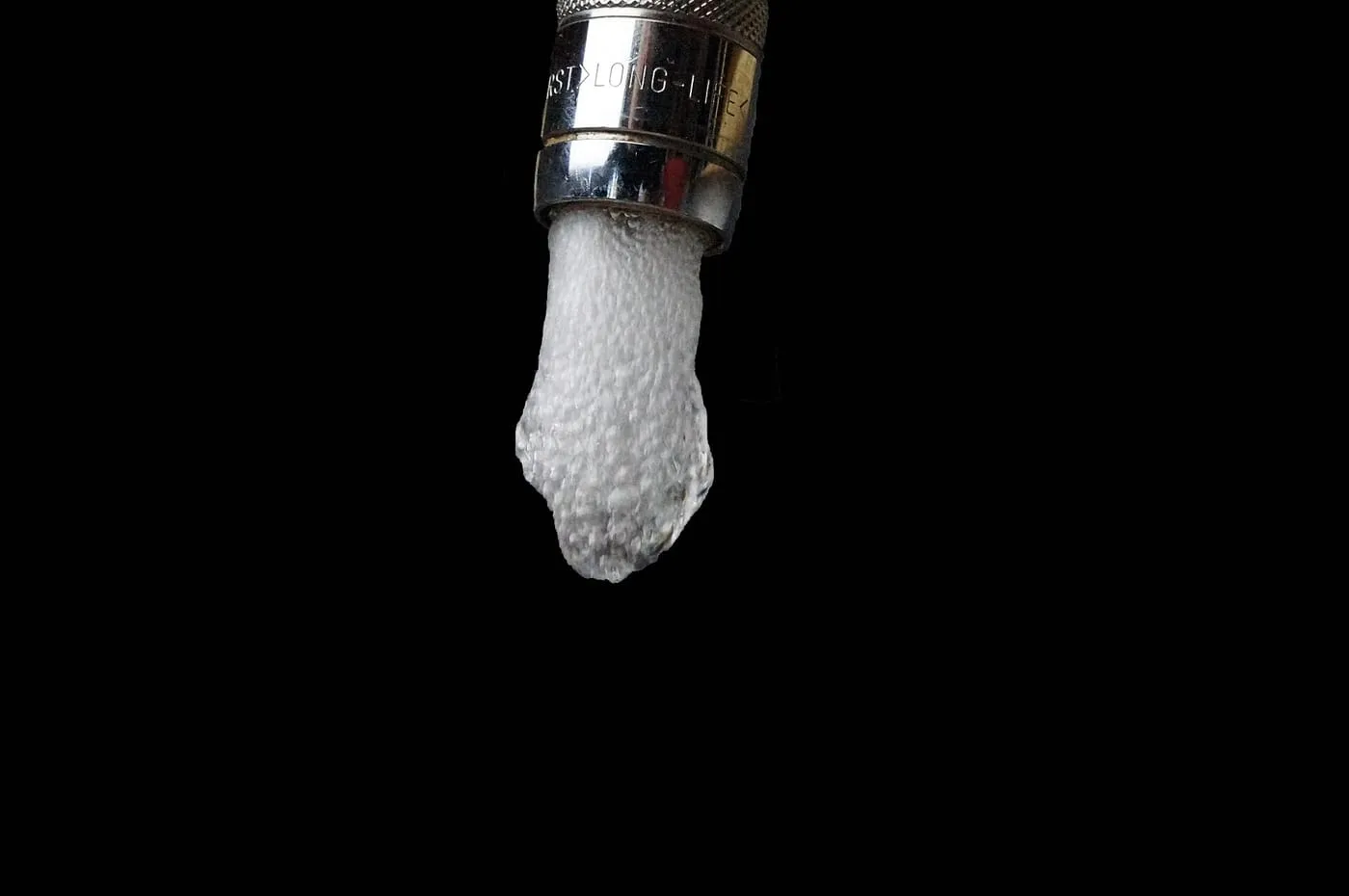
An airlock is a bubble of air trapped in a pipe that the water behind it is not strong enough to push out. The giveaway is timing: the problem appears straight after the supply has been turned off and back on, a tank has been drained, or someone has worked on the pipework.
Short answer: Open every tap on the affected supply, starting with the lowest, and let them run for a few minutes so the moving water carries the air out. If one tap stays dead, the cause is usually a tank-fed pipe, and a short hose from a mains cold tap can push the air back out, as long as the hose is removed straight afterwards.
Is it really an airlock?
Air in a pipe makes noise. You hear hissing, spitting or a hammering knock, and the flow comes in bursts. If a tap is silent and simply weak, the cause is more likely a part-closed valve, scale or low supply pressure. If every outlet in the house is dead, check that the stop tap is open and that neighbours have water before blaming air.
Why air gets trapped
Air enters whenever pipes are drained and refilled: after a repair, a new radiator or tap, a burst, or a planned shutdown by the water company. It then gathers at the highest point of a run, often a pipe that loops over a doorway or rises into the loft. On a mains supply, pressure usually pushes it straight through. On a supply fed by gravity from a loft tank, there is far less force, so a single pocket can block the pipe completely.
A tank that runs too low can also draw air into the outlet, which is why a sticking float valve in the loft sometimes causes repeated airlocks.
Clearing it: start with the taps
- Turn on every cold tap fed by the same supply, starting from the lowest in the house and working up.
- Leave them running for a few minutes. Spitting and coughing are normal while the air comes out.
- Turn them off in reverse order, highest first.
For a loft-tank system, check the tank is full before you start. If the level is low, the float valve needs attention before anything else.
The hose method for a tap that stays dead
When one tank-fed tap will not run, a mains cold tap can be used to push water backwards through it:
- Fit a short length of hose tightly over a mains-fed cold tap and the dead tap. Jubilee clips or a tap connector stop it blowing off.
- Open the dead tap first, then the mains tap, for about 20 to 30 seconds. Mains pressure pushes the air back up the pipe and out through the tank.
- Close the mains tap first, then the other.
- Disconnect the hose and check the dead tap now runs.
Keep it short and take the hose off afterwards. The Water Supply (Water Fittings) Regulations require every water system to guard against backflow, and a hose left joining the mains to a tank-fed or hot supply is exactly the kind of cross-connection they are written to prevent.
When the airlock keeps coming back
An airlock that returns every week has a cause that the taps cannot fix. The usual ones are a pipe laid with a hump that traps air, a loft tank whose float valve lets the level drop, or an open vent pipe discharging into the tank and drawing air into the system. Each needs the pipework or tank looking at. Our cold water tank service covers tanks and float valves, and if hot taps are weak rather than airlocked, see hot water pressure low but cold fine.
Questions people ask
What are the symptoms of an airlock?
A tap that hisses, sputters or bangs before water arrives, flow that surges and dies, or one outlet that gives nothing while others work. It nearly always starts straight after the water has been off or work has been done on the pipes.
Why do I have an airlock in the cold water pipes upstairs?
In many older London houses the upstairs cold taps, the bath and the toilet cisterns are fed from a storage tank in the loft rather than the mains. That supply has only gravity behind it, so a pocket of air at a high bend can stop it, while the mains-fed kitchen tap downstairs carries on as normal.
Will an airlock clear by itself?
Small ones often do after a few minutes of running the taps. A stubborn pocket can also move further along and lodge somewhere less convenient, so if a tap is still spluttering after a day it is worth clearing it properly.
Can drain pipes get an airlock?
Not in the same way. Gurgling plugholes and a toilet that bubbles when the bath empties are usually a venting problem or a partial blockage further down the drain. Our guide to clearing a blocked drain covers those.
Sources
- The Water Supply (Water Fittings) Regulations 1999, Schedule 2, legislation.gov.uk