
DIY vs Professional Plumbing: Where the Line Is
By Emergency Plumb,
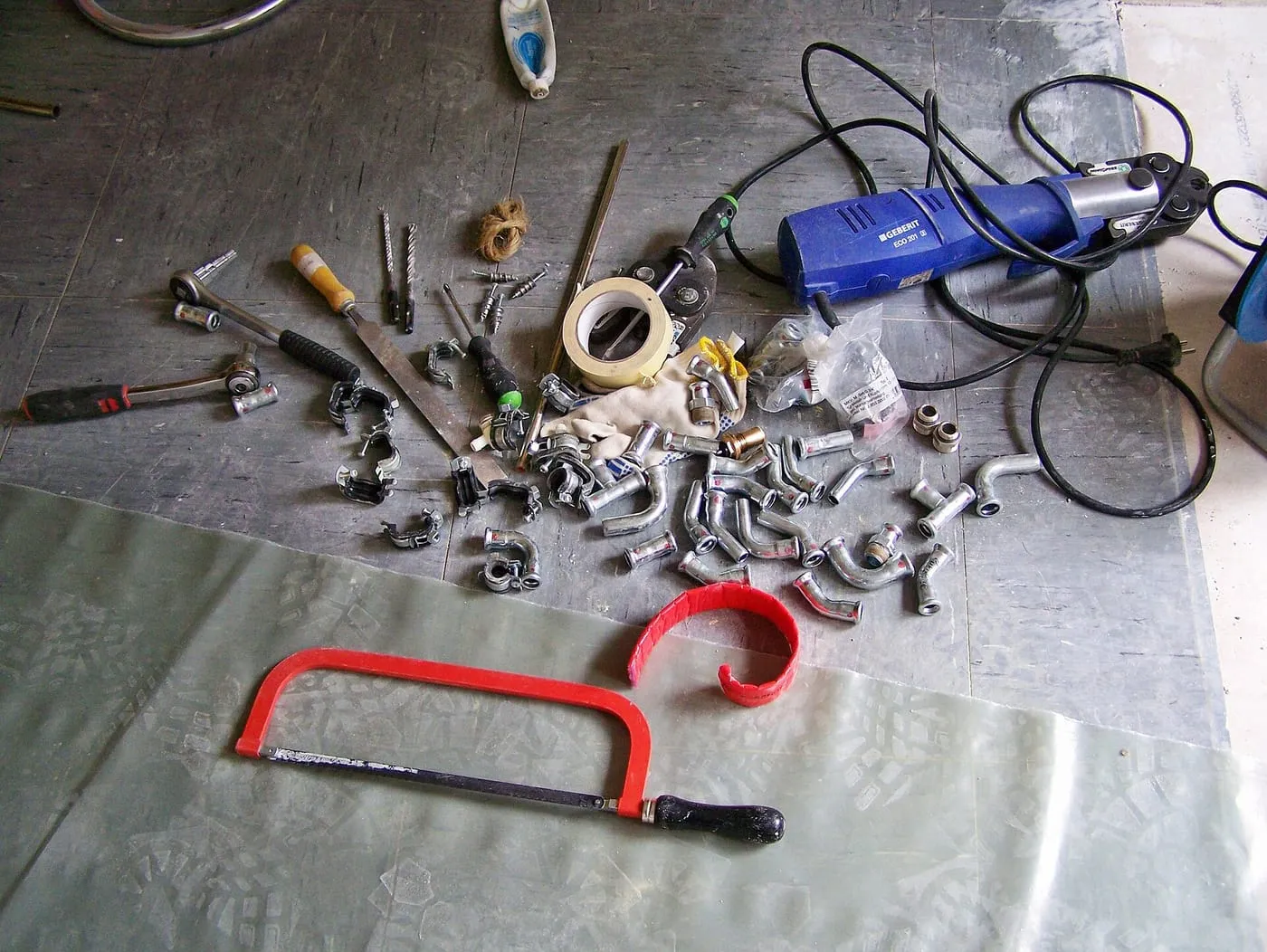

What you can safely do yourself, what is false economy, and what is actually illegal.
Short answer: You can legally do most plumbing in your own home, with two hard exceptions: gas work is never DIY and belongs with a qualified gas engineer, and unvented hot water cylinders require a G3 qualification. Everything else is a judgement about consequence - a tap washer is low risk, a joint inside a wall is not.
Genuinely DIY
Tap washers and cartridges, toilet cistern internals, trap cleaning, bleeding radiators, sealant renewal, repressurising a boiler. If it isolates with a valve and fails safe, it is learnable in an afternoon.
False economy
Anything buried, pressurised or structural: repiping, moving waste runs, unvented cylinder work. The failure mode is not inconvenience, it is a ceiling. The professional cost is buying the redo insurance, not just the labour.
Off limits without qualification
Gas appliances and gas pipework are for a gas engineer, and unvented cylinder work requires the G3 qualification. No exceptions for the handy, and your insurer agrees.
Where the legal line sits
Nothing involving gas is a homeowner job, however confident you are with a spanner; leave it to someone trained for it. Unvented cylinder work requires a G3 qualification and is notifiable. Electrical work in a bathroom falls under Part P. Everything else is legally yours to attempt, which is not the same as it being wise.
The jobs that go wrong most often
Overtightening a compression fitting, which crushes the olive and creates the leak it was meant to prevent. Using PTFE tape on a fitting with a rubber washer, where it does nothing. And reassembling a trap without checking the seal seats properly, the leak appears under a cupboard and is found weeks later by the smell.
When DIY invalidates something
Insurance, for damage caused by unqualified work. Manufacturer warranties, on appliances self-installed outside the instructions. And your position if you sell the house, where unnotified work on gas, unvented cylinders or drainage becomes a conveyancing problem. The saving on the day is rarely the whole calculation.
Questions people ask
What plumbing work should I never do myself?
Anything on gas appliances or gas pipework is never DIY; it is a job for a qualified gas engineer. Unvented hot water cylinder installation and servicing requires G3 certification. Both lines are drawn hard because the failure mode is explosion or carbon monoxide, not a puddle.
Will DIY plumbing invalidate my home insurance?
It can. Most policies cover escape of water but exclude damage arising from faulty workmanship. If a joint you soldered fails behind a wall, the insurer may decline. Work you can see and reach is much lower risk than work you cannot.
Is it safe to bleed my own radiators?
Yes - that is routine homeowner maintenance. Turn the heating off, let it cool, open the bleed valve with a key until water appears, close it, then repressurise the boiler to 1.0-1.5 bar. Doing it with the system hot is how people get scalded.
When should I stop and call someone?
When it involves gas, when you cannot isolate the water, when the pipe is buried in a wall or floor, or when you have already tried once and it is now worse. The last one is the most expensive to ignore.