
Boiler Losing Pressure But No Leak? Check the Vessel
By Emergency Plumb,
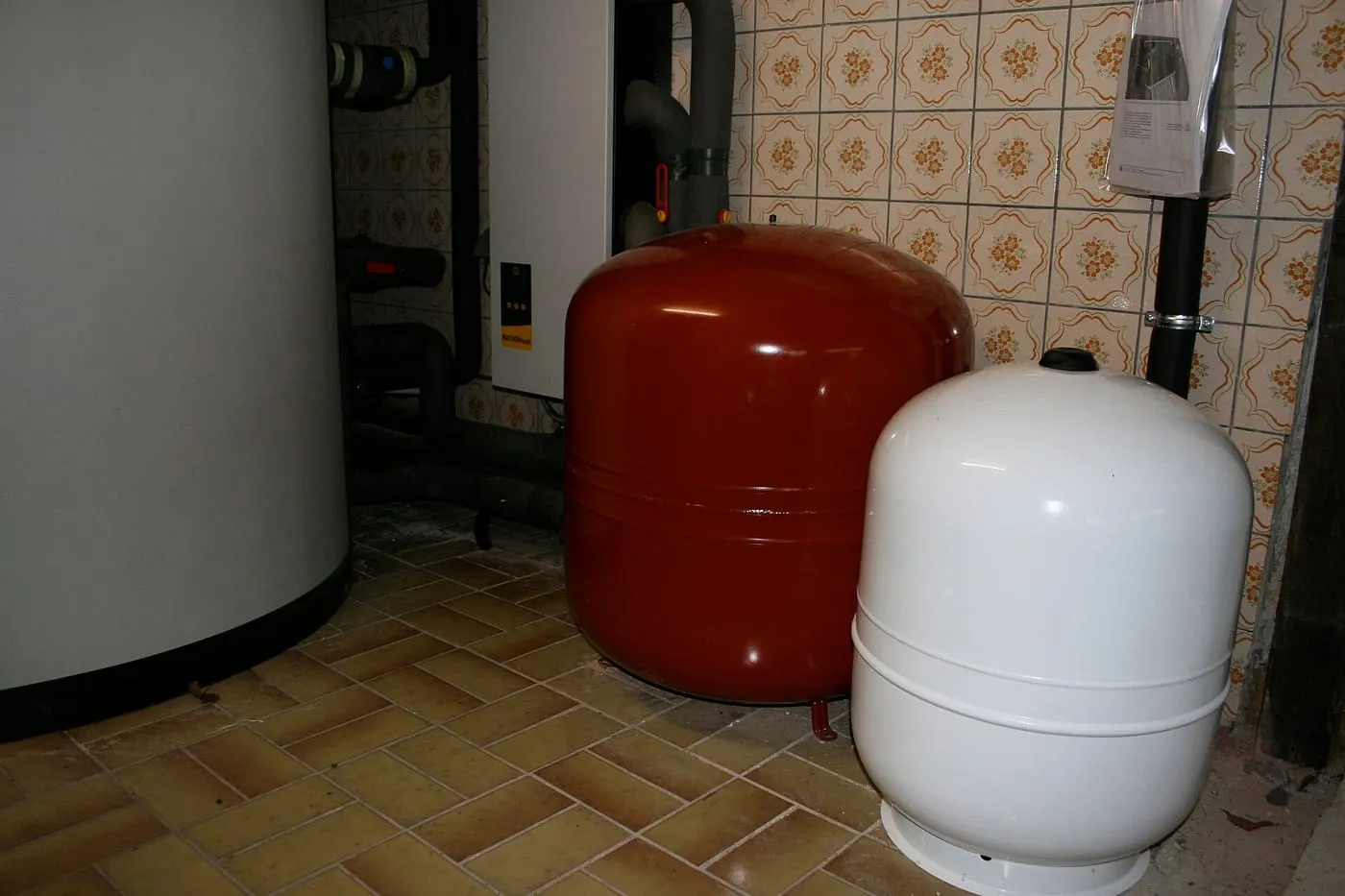

No damp patch anywhere and the pressure still drops.
Short answer: Go outside and look at the pressure relief discharge pipe on the external wall. Dripping or limescale staining means the expansion vessel has failed - pressure spikes when the system heats, the safety valve opens, and water leaves through the wall. Nothing leaked indoors because nothing was ever leaking indoors.
A sealed system cannot consume water
Start from this, because it rules out every reassuring explanation. A sealed heating system is closed: the same water circulates indefinitely. It does not evaporate, and it is not used up. If you are topping up, water is leaving the system. The only question is where, and “no visible leak” narrows it rather than eliminating it.
The pressure relief valve and the pipe outside
This is the answer people miss, and it accounts for most no-visible-leak cases. Every boiler has a pressure relief valve piped to a small copper or plastic pipe that terminates outside, usually on an external wall near the boiler. When the system over-pressurises, this valve opens and dumps water outdoors. Nothing appears indoors because nothing leaked indoors. Go outside and look at that pipe: dripping, recent wet staining, or limescale streaks down the brickwork all confirm it.
Which means the expansion vessel has failed
The vessel is a sealed chamber with a rubber diaphragm and a charge of air behind it, absorbing the expansion of water as the system heats. When the charge is lost, and it does leak away over years, the water has nowhere to expand into, so pressure spikes past 2.5 bar every time the heating runs, the relief valve opens, and water goes outside. The system cools and reads low. Repeat daily. An engineer can often recharge the vessel with a pump; where the diaphragm itself has split, it needs replacing.
Leaks that genuinely hide
If the discharge pipe is dry, there are three places a leak hides. Radiator valve glands weep just enough to evaporate before puddling, leaving a faint rusty or white crust on the valve body. Pipework buried in a solid floor shows as a warm patch underfoot rather than water. And a corroding heat exchanger inside the boiler can leak internally into the condensate trap, which drains away invisibly, that one is diagnosed by isolating the boiler from the circuit overnight and seeing which side loses pressure.
What not to do while you work it out
Do not keep topping up indefinitely. Every top-up brings fresh oxygenated mains water into the system, which drives the corrosion that produces sludge, blocks heat exchangers and pinholes radiators. A system topped up weekly for a year has quietly created a second and more expensive problem on top of the first. Top up to get through until an engineer attends, then get the cause found.
Questions people ask
Can a boiler lose pressure without a leak?
Not really - a sealed system cannot consume water, so it is always going somewhere. What people mean is no leak indoors, and the usual answer is a failed expansion vessel pushing water out through the pressure relief valve to a pipe outside.
Where is the pressure relief discharge pipe?
A small copper or plastic pipe on the external wall, usually near the boiler and pointing downwards. Look for active dripping, recent wet staining on the brickwork below it, or white limescale streaks that show it has been discharging repeatedly.
Can an expansion vessel be repaired or does it need replacing?
Often repaired. The vessel holds a charge of air behind a rubber diaphragm, and an engineer can frequently recharge it with a pump for a fraction of a replacement. Where the diaphragm itself has split, the vessel needs replacing.
What if the discharge pipe is dry?
Then there is a genuine leak hiding. The three places to look are radiator valve glands, where a weep evaporates before it puddles and leaves a rusty crust; pipework in a solid floor, which shows as a warm patch underfoot; and the boiler heat exchanger, which leaks internally into the condensate and drains away invisibly.