
Installing Kitchen Sinks and Appliances Properly
By Emergency Plumb,
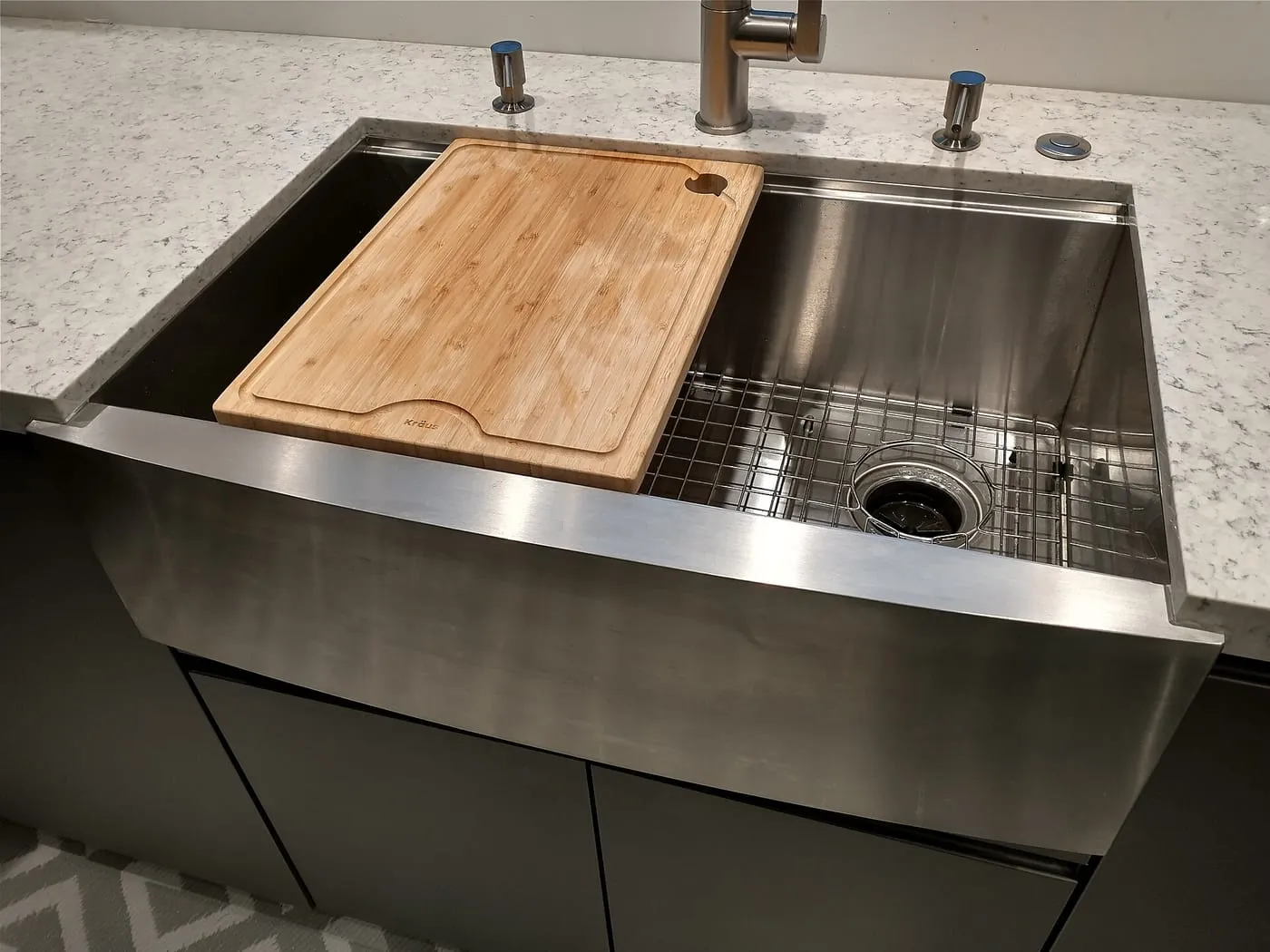

The plumbing details that decide whether a new kitchen works quietly for a decade.
Short answer: Three things decide whether a kitchen install works: adequate fall on the waste run, isolating valves on every supply, and a properly vented appliance connection. Get those right and the sink, dishwasher and washing machine will run for years. Get the fall wrong and you will be clearing blockages permanently.
Sinks
Support the sink’s weight properly, seal the rim before clamping, and fit full-bore isolation valves on both supplies while everything is accessible. The trap should be a proper tubular trap with room to remove it, not a flexi concertina jammed into a corner.
Washing machines and dishwashers
Cold feed with its own quarter-turn valve, waste connected to a standpipe or a dedicated trap spigot at the right height, and the drain hose looped high to stop the machine siphoning itself empty. Transit bolts out before the first spin.
The details that flood kitchens
Self-cutting valves, unsupported push-fit under constant vibration, and hoses kinked behind the machine cause most kitchen floods we attend. Ten extra minutes at installation is the whole difference.
Get the waste route right first
A dishwasher or washing machine drain hose must rise to a high loop before falling to the trap, or the machine siphons and sits in dirty water. It is the single most common installation fault we correct, and it is almost always mistaken for a broken appliance rather than a plumbing error.
Isolation valves on everything
Every tap tail and every appliance supply should have its own isolating valve. It costs very little at installation and turns every future repair into a ten-minute job instead of one that starts with draining the system. Retrofitting them later means doing exactly that drain-down first.
Sealing and support
A sink sealed to the worktop with the right silicone, and supported properly underneath, will not move. One that moves breaks its own seal, and water gets into the worktop edge where it swells and cannot be reversed. On a stone or laminate top the sealing detail is what protects the most expensive item in the kitchen.
Questions people ask
What fall does a kitchen waste pipe need?
Around 1 in 40 for 40mm waste pipe - roughly 20mm of drop per metre. Too little and solids settle; too much and water outruns the waste, leaving debris behind. Long horizontal runs created by side-return extensions are where this most often goes wrong.
Do I need isolating valves under the sink?
They are not mandatory but they are the difference between a ten-minute tap repair and a whole-house drain-down. Fit full-bore lever valves on both hot and cold tails - they cost a few pounds and pay for themselves the first time anything needs changing.
Can I plumb in a dishwasher myself?
Yes, provided the waste connection is made properly with an air break or a high loop to prevent back-siphonage, and the supply is teed with its own isolating valve. Poor waste connections are the cause of most "smelly dishwasher" complaints.
Why does my new sink smell?
Usually an appliance spigot connected below the trap water line, or a trap with no water in it because the fall is wrong. Both let drain air into the cupboard. It is a plumbing fault, not a cleaning problem.