
What Is Pipework Lagging, and Which Pipes Need It?
By Emergency Plumb,
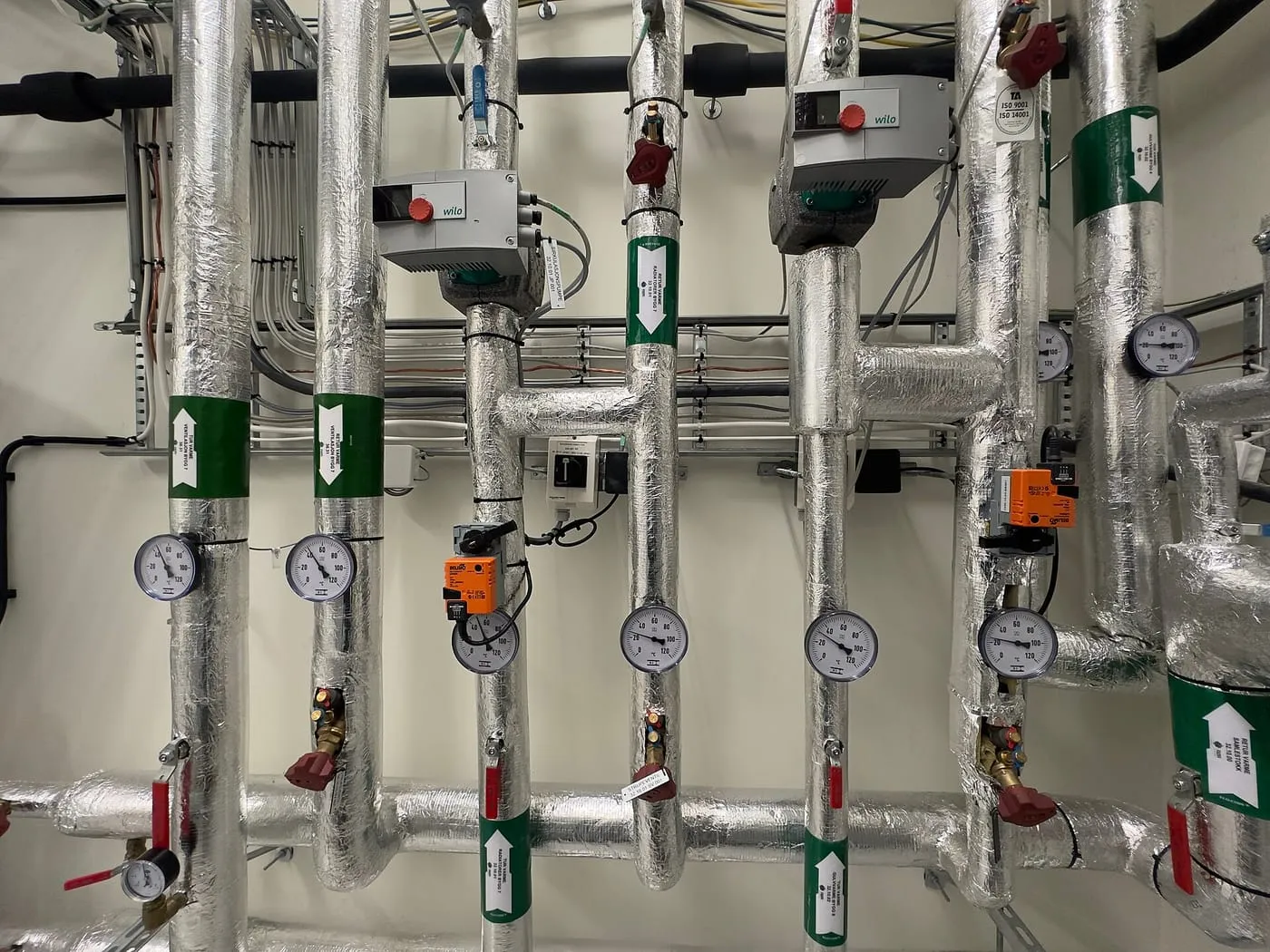
_varmtvann_isolerte_r%C3%B8r_m%C3%A5lere_termometere_sirkulasjonspumpe_strupeventil_radiatorer_gulvvarme_elkabler_etc_IMG_0350.jpg)
Lagging is a foam jacket that stops pipes freezing.
Short answer: Pipework lagging is insulation, usually a slit foam tube, fitted around water pipes to slow heat loss. It stops pipes in cold spaces such as lofts, garages and outside walls from freezing and bursting in winter, and keeps hot pipes warmer. It is cheap, and most people can fit it themselves.
What is pipework lagging?
Pipework lagging is insulation wrapped around a water pipe to slow down heat loss. Most of it is a tube of foam with a slit down one side that you push over the pipe. In winter it keeps cold water pipes in unheated spaces from freezing and bursting, and on hot water pipes it keeps the heat in so less energy is wasted. It is cheap, sold in any DIY shop, and most people can fit it themselves in an afternoon.
Which pipes need lagging?
Lag any pipe that runs through a space the heating does not reach. The loft is the big one, because it can be as cold as outside on a winter night. Pipes in a garage, an outbuilding, under a suspended floor or in a cellar need it too. So do pipes that run along or through an outside wall, including those inside kitchen units against an outside wall, where cold air gets in around the pipework. Outside taps and the pipe feeding them are a classic weak point. Pipes that run through heated rooms usually do not need lagging to stop freezing, though lagging hot pipes there can still save a little energy.
Do not forget the boiler condensate pipe
If you have a modern condensing boiler, look for a thin white plastic pipe coming out of the wall near it and running to a drain. That is the condensate pipe. It carries waste water away from the boiler, and when it runs outside it can freeze in a cold snap. When it freezes, the boiler shuts down, usually with a fault code, and you lose both heating and hot water. Lagging the outside section with foam made for plastic waste pipe helps a lot. Where an outside run is long or exposed, an engineer may also suggest rerouting it indoors or upsizing it to a wider pipe, which freezes far less easily.
Types of foam lagging and how thick it should be
Foam lagging is sold by two measurements: the size of pipe it fits and how thick the foam wall is. Most household pipes are 15mm or 22mm across, so check yours before you buy, because a loose fit leaves gaps. Common foam thicknesses are around 9mm to 13mm for indoor use, and 19mm to 25mm for lofts and outside. Thicker is better anywhere cold. For outside pipes, choose a weatherproof type or cover standard foam with waterproof tape, because wet foam insulates poorly. Fit it snugly, tape the joins and the slit, and cut neat mitres at bends so there are no bare patches. A bare gap of a few centimetres is exactly where a pipe freezes. Besides standard grey polyethylene foam, you will also see black rubber-style lagging, which is more flexible and copes better with heat, so it suits hot pipes near a cylinder. For very exposed outside pipes, a plumber can fit electric trace heating tape under the lagging, but that needs a proper outdoor power supply and is not a DIY job.
Lagging the cold water tank in the loft
If you have a cold water tank in the loft, it needs protecting as well as the pipes. Fit a proper insulation jacket around the sides and a close-fitting lid on top, which also keeps dust and insects out of the water. The one mistake to avoid is insulating the loft floor directly underneath the tank. Leave that patch uninsulated so a little warmth from the house below rises up to it. Lagging the pipes that go into and out of the tank is just as important, and the overflow pipe too. If you have a hot water cylinder in an airing cupboard, check it has a jacket or factory foam coating, and lag the first metre or so of hot pipe coming out of it. That keeps more heat in the water you have already paid to heat.
What you should never lag
Never wrap lagging or any other insulation around a boiler flue, the pipe that carries fumes out of the boiler, or around the boiler itself. It can overheat, damage the flue and, at worst, lead to dangerous gases escaping. Keep lagging well away from anything electrical, such as immersion heater wiring or a pump’s terminal box. If you have any doubt about whether a pipe is a flue, leave it alone and ask a heating engineer.
A simple before-winter checklist
Do this each autumn, before the first frost. Walk the loft with a torch and check every pipe is covered, with no gaps at bends or joints. Check the tank has its jacket and lid. Look at the outside of the house: the condensate pipe, outside taps and any pipes on walls. Replace foam that has gone brittle, crumbled or been chewed. Find your stopcock and make sure it turns, so you can shut off the water quickly if a pipe does freeze and split. For what to do day to day through a cold spell, such as heating settings and going away, see our guide on how to prevent pipes from freezing.
Is lagging worth doing, and when to call a plumber
Lagging costs very little compared with the damage a burst pipe can do to ceilings, floors and belongings. Most people can fit it themselves. It is worth calling a plumber if pipes are hard to reach, under floors or boxed in, or if you have had a pipe freeze before and want the run moved somewhere warmer. If a pipe has already burst, turn off the stopcock and call.
Questions people ask
Which pipes should be lagged?
Any pipe in an unheated space: the loft, garage, outbuildings, under floors, along outside walls, and outside taps. Do not forget the boiler condensate pipe where it runs outside, and the pipes in and out of a loft cold water tank.
How thick should pipe lagging be?
Match the lagging to your pipe size, usually 15mm or 22mm, so it fits snugly. Around 9mm to 13mm of foam is common indoors; use thicker lagging, around 19mm to 25mm, in lofts and outside. Thicker is better anywhere cold.
Should I lag my boiler condensate pipe?
Yes, if it runs outside. A frozen condensate pipe shuts the boiler down, so you lose heating and hot water. Lagging helps, and an engineer may suggest rerouting it indoors or using a wider pipe on long, exposed runs.
Is there anything I should not lag?
Never lag the boiler flue or the boiler itself, as it can overheat and let dangerous gases escape. Keep lagging away from electrical parts, and do not insulate the loft floor directly under a cold water tank, so a little warmth can reach it.
Does lagging stop pipes freezing completely?
It slows heat loss, which buys time in a cold spell, but it cannot stop a pipe freezing forever in a very cold space. Combine it with keeping some heat on in winter and knowing where your stopcock is.