
How to Stop Your Pipes Freezing This Winter
By Emergency Plumb,
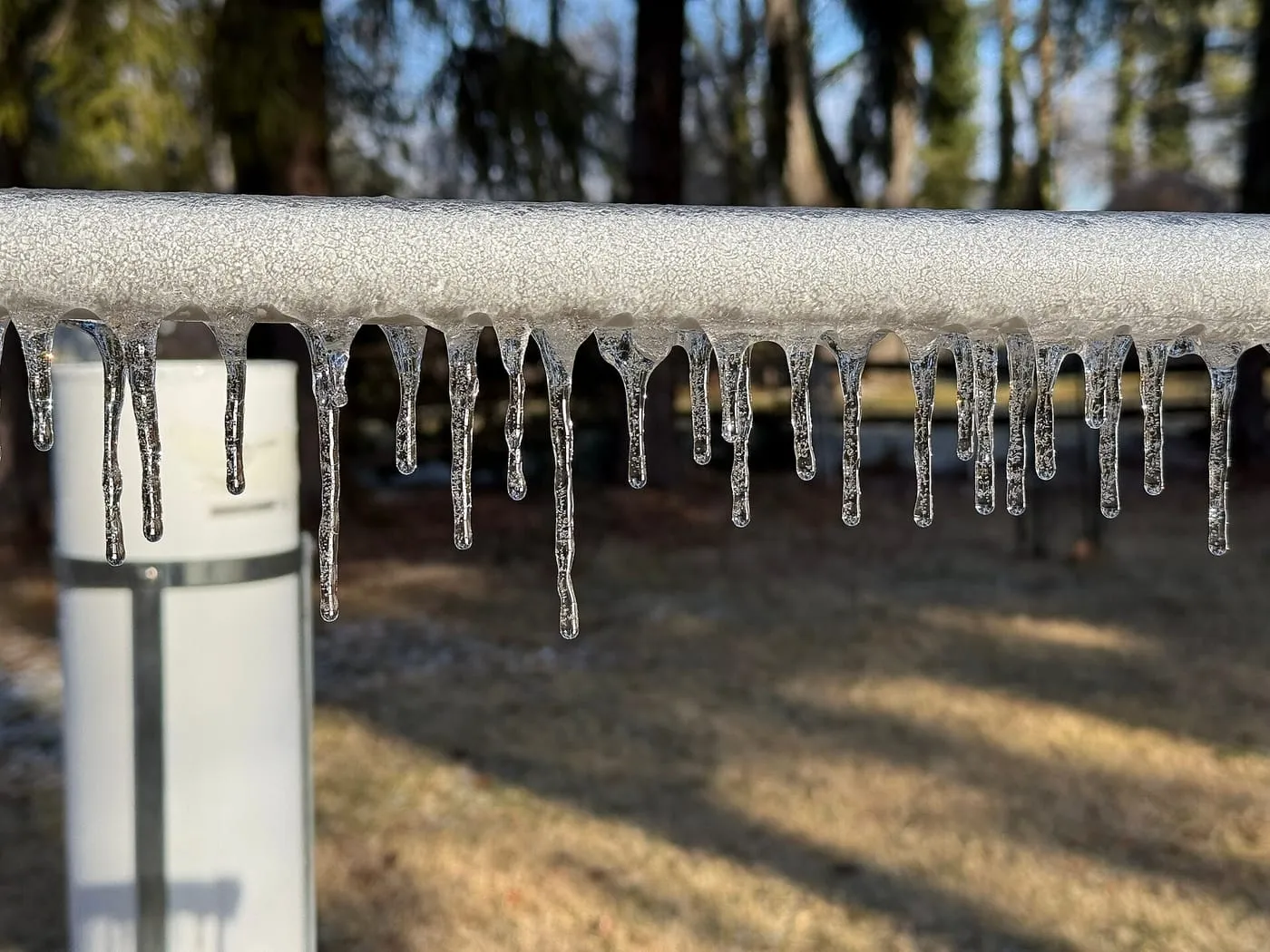

The cheap jobs in October that prevent the expensive ones in January.
Short answer: Lag every pipe in an unheated space - loft, garage, outbuilding and the external condensate pipe - keep the heating at a minimum of 12-14°C when away, and know where your stopcock is. Pipes freeze where they sit above the insulation line, which is why loft runs fail first.
Why pipes burst in a freeze
Water expands roughly 9% as it freezes. In a sealed pipe that expansion has nowhere to go, so pressure builds between the ice plug and the nearest closed tap until something splits, usually a joint, often somewhere you can’t see. The flood arrives at thaw, not at freeze.
The October checklist
Lag any pipe in an unheated space, loft, garage, under the ground floor. Fix dripping taps (a drip becomes an ice plug). Find and exercise your stopcock before you need it. If you leave the house empty in winter, keep heating on low rather than off.
If they freeze anyway
Turn off the stopcock first, then open the nearest cold tap. Thaw gently from the tap end with a hair dryer or hot-water bottles, never a blowtorch. If a section has already split, the leak starts as it thaws, so have towels down before you warm anything.
The places that actually freeze
Loft pipework above the insulation, where it sits in outside air. Runs in an unheated garage or outhouse. Pipes against an external wall in an unheated room. The boiler condensate pipe outside, the most common winter lockout of all. And an outside tap with no internal isolation valve, which bursts inside the wall rather than outside it.
Lagging done properly
Foam sleeve sized to the pipe, butted tight at every join with no gaps at bends or fittings, and taped at the seams. A lagged pipe with a 100mm gap at the elbow will freeze at the elbow. Insulation slows heat loss, it does not add heat, so a pipe with no warmth reaching it will still freeze eventually, lagging buys time, not immunity.
Leaving the property empty
For a few days, heating on low, around 12 to 14°C, is enough and costs little. For a longer absence, drain the system: stopcock off, every tap opened until it runs dry, and the heating left on frost protection. Tell a neighbour where the stopcock is. Most burst-pipe insurance claims we see involve an empty house and an unattended thaw.
Questions people ask
At what temperature do pipes freeze?
Water freezes at 0°C, but a pipe in still air inside an unheated loft can drop below that while the outside temperature is still 2-3°C. Sustained cold matters more than a single frosty night - most burst call-outs come after several days below freezing.
Should I leave the heating on when I go away in winter?
Yes. A background 12-14°C costs far less than one burst pipe, and it keeps loft and wall cavities above freezing. Frost-stat settings on a timer are better than switching everything off.
My condensate pipe keeps freezing - what do I do?
That white plastic pipe outside is the most common winter boiler lockout in the UK. Pour warm - not boiling - water along its length, then reset the boiler. Lag it properly, or have it re-routed internally, and it should not recur.
What do I do if a pipe has already frozen?
Turn the stopcock off first, then open the nearest cold tap to relieve pressure. Thaw gently from the tap end with a hair dryer or hot-water bottles, never a blowtorch. If the pipe has split it will only start leaking as it thaws, so have towels down before you begin.