
Radiator Cold at the Bottom? That Is Sludge, Not Air
By Emergency Plumb,
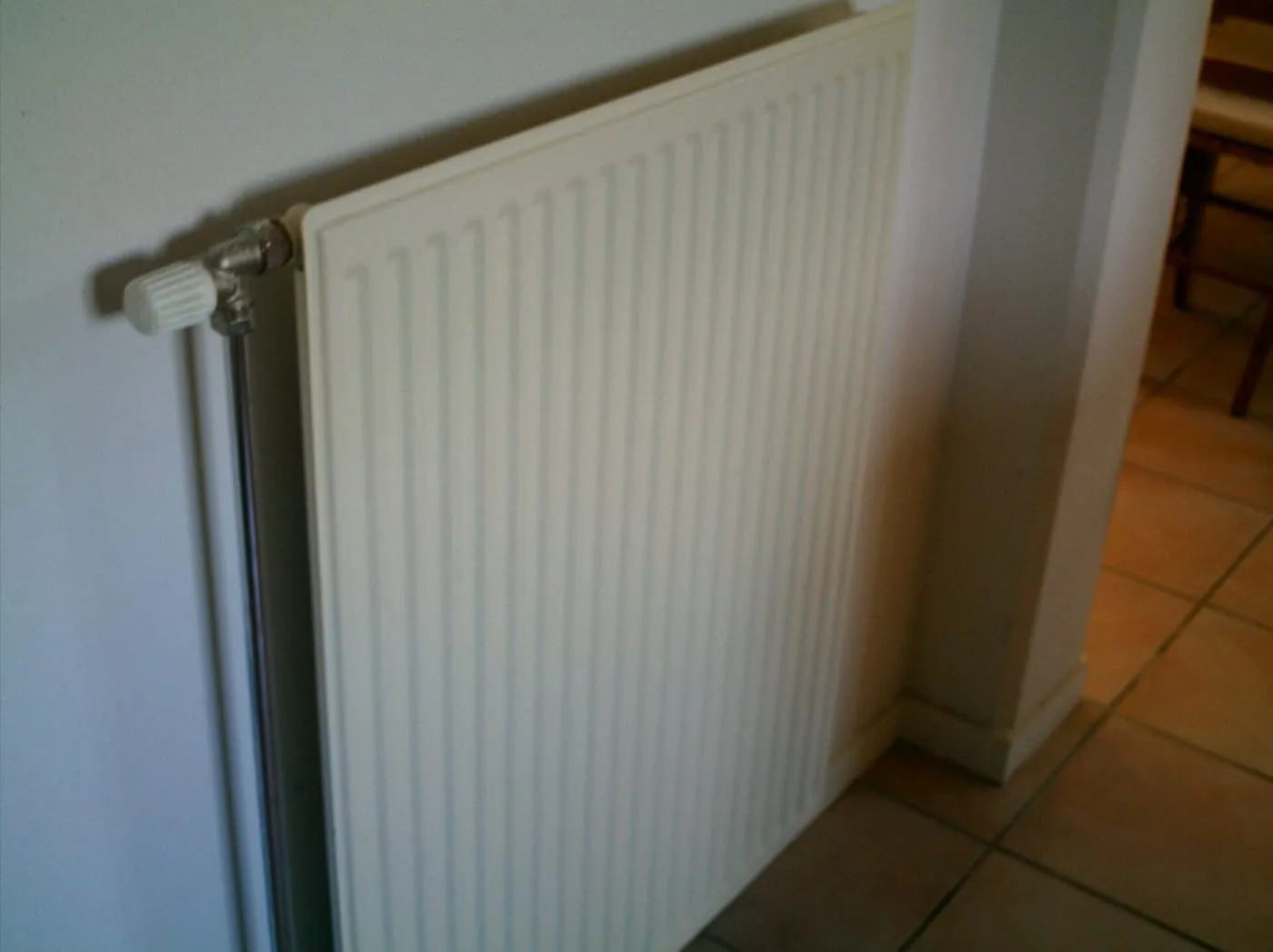

Cold at the bottom and warm at the top is the opposite of an air problem, and bleeding it will not help.
Short answer: Cold at the bottom and warm at the top means magnetite sludge has settled in the panel, blocking circulation. It is the opposite of an air problem, so bleeding will not help. The fix is a power flush, correct inhibitor dosing and a magnetic filter to stop it returning.
Why the diagnosis matters
Cold at the top and warm at the bottom is trapped air, and a bleed key fixes it in two minutes. Cold at the bottom and warm at the top is the reverse: something heavier than water is sitting in the bottom of the panel and blocking circulation. That something is magnetite, black iron oxide sludge produced by corrosion inside the system. Bleeding a radiator with this problem achieves nothing except dropping your boiler pressure.
Where the sludge comes from
A sealed heating system contains a fixed volume of water treated with a corrosion inhibitor. Over years the inhibitor depletes, and every time the system is drained, topped up or opened for a repair, fresh oxygenated water comes in. Oxygen plus steel radiators produces iron oxide, which is heavier than water and settles wherever flow is slowest, the bottom of every panel. In soft-water areas this is the dominant heating failure, because there is no scale but the water is mildly aggressive to steel and copper.
What it costs you while you ignore it
A radiator that is only heating across its top third is delivering perhaps half its rated output, so the room never quite gets warm and the boiler runs longer trying. Multiply that across a house and it is a measurable amount on the gas bill every winter. The sludge also circulates: it blocks the boiler heat exchanger, wears the pump, and eventually pinholes radiators from the inside out, which is when a cold radiator becomes a leaking one.
The fix, and the fix that lasts
A power flush circulates a cleaning agent at high velocity through every radiator and the boiler, lifting the deposits and pulling them out. Done properly it takes most of a day for an average house. What makes it last is what happens afterwards: dosing the system with inhibitor to the correct concentration, and fitting a magnetic filter on the return so future magnetite is captured rather than redistributed. A flush without both is a job you will repeat in three or four years.
How to check before paying for anything
Ask any engineer quoting a flush to take a sample of the system water first. Draw off a small amount from a radiator drain point into a clear glass. Healthy treated water is clear or lightly tinted. Water that is black, or that leaves a magnetic sludge on a fridge magnet held against the glass, confirms the diagnosis. That test costs nothing and it is the difference between an evidenced recommendation and a sales pitch.
Questions people ask
Why is my radiator cold at the bottom but hot at the top?
Sludge. Magnetite - black iron oxide from internal corrosion - is heavier than water and settles along the bottom of the panel, blocking flow through the lower section while water still circulates across the top.
Will bleeding a radiator fix a cold bottom?
No. Bleeding releases trapped air, which collects at the top. A cold bottom is a blockage at the bottom. Bleeding it achieves nothing except dropping your boiler pressure.
How much does a power flush cost in the UK?
There is no call-out charge. It is £99 for the first hour, then £49 for each additional half hour, plus the cost of parts, and the same at any hour of the day or night.
How do I know if my system really needs flushing?
Ask the engineer to draw a sample of system water into a clear glass before quoting. Healthy treated water is clear or lightly tinted; black water, or sludge that responds to a fridge magnet held against the glass, confirms it. That test costs nothing.