
Boiler Pressure Too High? What to Do and Why It Happens
By Emergency Plumb,
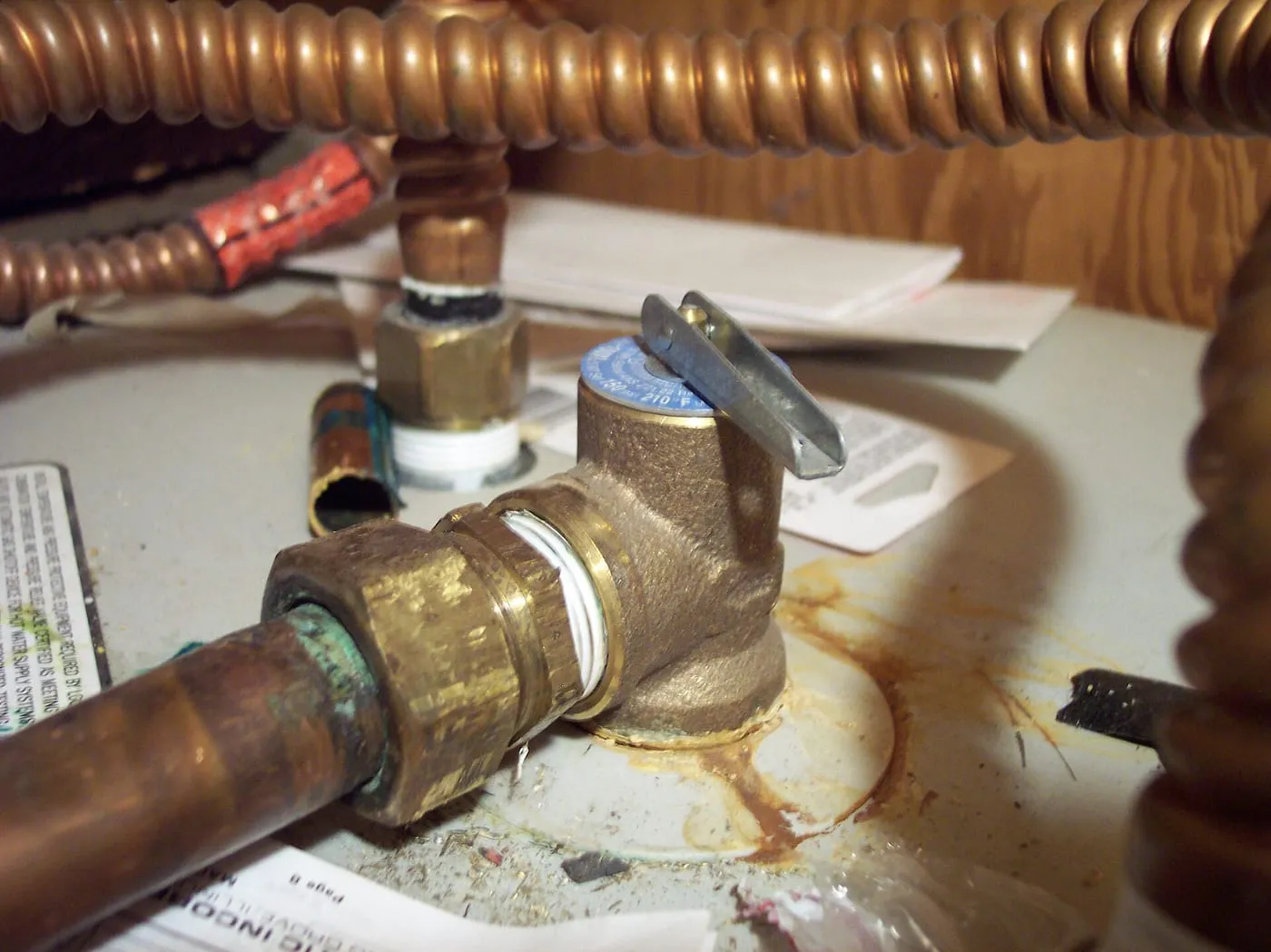
Above 2.5 bar and the safety valve will dump water outside.
Short answer: A sealed system should read 1.0-1.5 bar cold and up to about 2.0 bar hot. Above 2.5 bar the pressure relief valve discharges outside. The usual cause is a filling loop left partly open after topping up, not a fault - check both ends are fully closed before anything else.
What the gauge should read
A sealed system should sit between 1.0 and 1.5 bar when cold, rising to somewhere around 1.5 to 2.0 bar when hot. That rise is normal, water expands as it heats. Above about 2.5 bar the pressure relief valve opens and discharges water through a pipe outside, which protects the boiler but leaves you low again once it cools.
The commonest cause is a filling loop left open
Most high-pressure problems come down to this. After topping the system up, the filling loop, the braided hose or lever valve under the boiler, was not fully closed. Mains water continues to seep in, and mains pressure is typically 2 to 4 bar, far above what the system wants. Check that both ends of the loop are closed and, on a braided hose, disconnect it entirely once the system is at pressure.
How to bring it down safely
With the loop confirmed closed and the heating off and cool, bleed a small amount of water from a radiator. Fit the bleed key, hold a container underneath, open it briefly and watch the boiler gauge. Close it as soon as the needle reaches 1.5 bar. Doing it in short bursts rather than one long release keeps you from overshooting and ending up too low instead.
If it climbs again on its own
A system that returns to high pressure with the filling loop genuinely closed has a fault rather than a habit. Two candidates: a failed expansion vessel, which cannot absorb expansion any more so pressure spikes every time the system heats, or a passing plate heat exchanger on a combi, which lets mains water leak internally into the heating circuit. Both need an engineer, and the vessel is far more common.
Is high boiler pressure dangerous?
Not in the sense of an explosion. The pressure relief valve exists precisely to prevent that, and it will discharge outside long before anything is at risk. What high pressure does do is stress joints, seals and the pump, and repeated discharging wastes treated water and inhibitor. It is a fault worth fixing promptly rather than an emergency.
Questions people ask
What should my boiler pressure be?
Between 1.0 and 1.5 bar when the system is cold, rising to roughly 1.5-2.0 bar when hot. That rise is normal expansion. Consistently above 2.5 bar cold is too high.
How do I reduce boiler pressure?
With the filling loop confirmed closed and the system cool, bleed a small amount of water from a radiator while watching the boiler gauge, closing the valve as it reaches 1.5 bar. Short bursts rather than one long release stops you overshooting.
Is high boiler pressure dangerous?
Not in the sense of an explosion - the pressure relief valve exists to prevent that and will discharge outside first. But it stresses joints, seals and the pump, and repeated discharging wastes treated water and inhibitor, so it is worth fixing promptly.
Why does my boiler pressure keep rising on its own?
With the filling loop genuinely closed, either the expansion vessel has lost its charge and cannot absorb expansion, or on a combi the plate heat exchanger is passing mains water into the heating circuit. The vessel is far more common and often rechargeable.