
Boiler Fault Codes: Worcester, Baxi, Ideal and Vaillant
By Emergency Plumb,
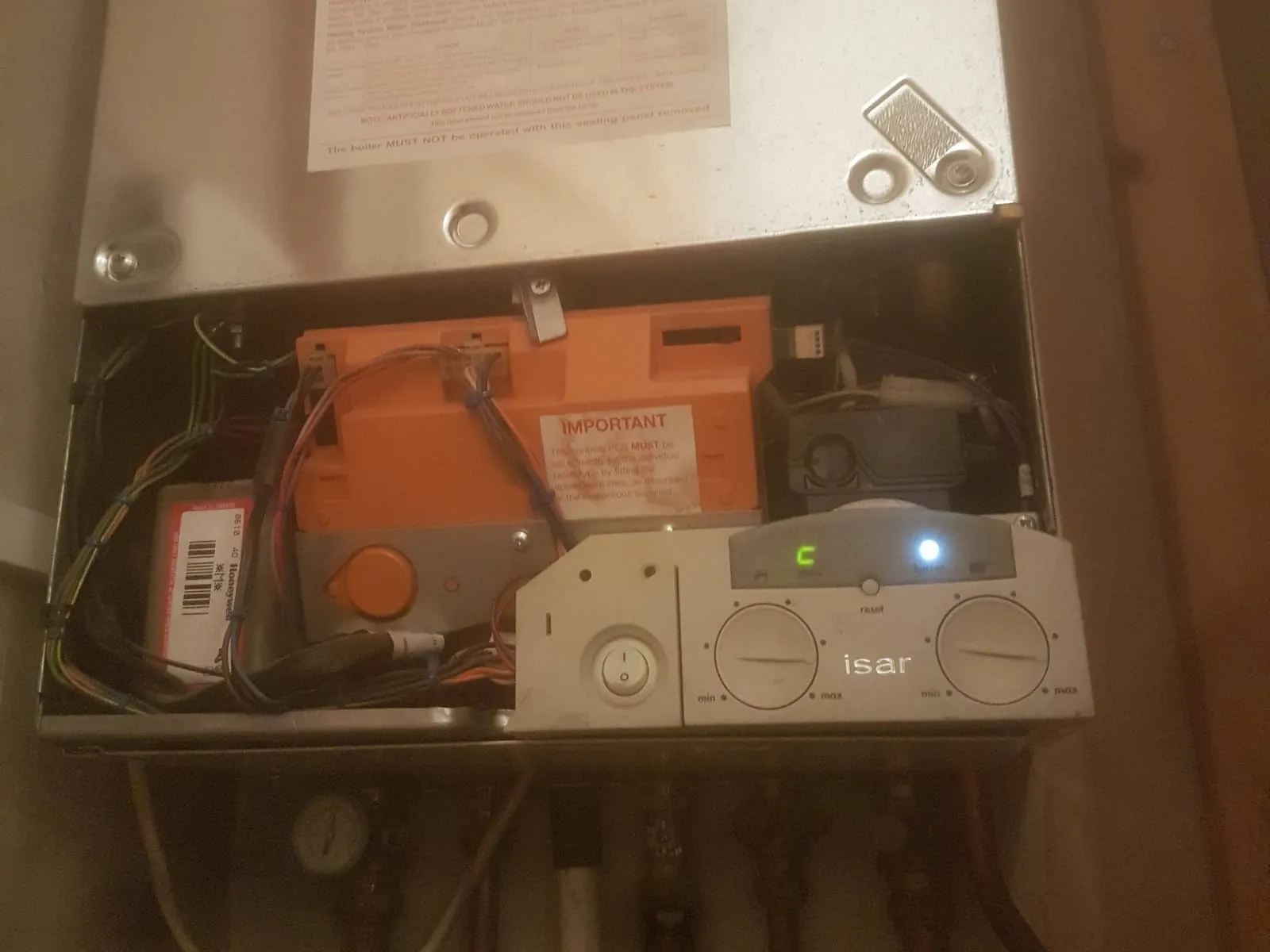
A boiler does not break quietly. When something is wrong it stops, puts a letter and a number on its display, and often flashes a light. That code is the most useful thing you have when you ring for help, and with the four big brands in London homes a handful of codes cover most call-outs.
Before anything else: read the pressure gauge. If the needle sits below 1 bar, or the digital reading says 0.5 or 0.8, the code is almost certainly about pressure and you may be able to fix it yourself in a few minutes.
The three families of code
Almost every code falls into one of three groups, whatever the brand.
Water pressure. The system has lost water and the boiler refuses to fire to avoid running dry. Common and usually user-fixable once, with a filling loop.
Ignition or flame. The boiler tried to light and did not see a flame, or saw it go out. Causes range from a frozen condensate pipe or an empty prepayment meter to a worn electrode or a failed gas valve.
Temperature, fan, pump or sensor. A part has stopped reporting what the board expects: too hot, no air moving, no water circulating, or a sensor reading that makes no sense. These are repairs, not resets.
Worcester Bosch
- EA 227: no flame detected after the boiler tried to light. Check the gas is on at other appliances and that the condensate pipe outside is not frozen, then reset once.
- E9 224: the safety temperature limiter has tripped, so something overheated. Often poor circulation: a sticking pump, sludge, or radiator valves all closed. Reset once; if it returns, book a repair.
- CE 207 and a flashing blue light: on many Greenstar models this points to low system pressure. Check the gauge and top up if it is low. On some models the same code is used for other faults, so if the pressure is fine, treat it as a repair.
Baxi
- E119: low water pressure. Top up through the filling loop to the level your manual gives, usually between 1 and 1.5 bar when cold.
- E133: the boiler could not light, most often because gas is not reaching it. Check the hob or meter, and a frozen condensate pipe, before resetting.
- E160: generally a fan fault on current models. The fan is a part to replace, not something to clear by resetting.
Ideal
- F1: water pressure too low. Repressurise and watch whether it falls again over the next day or two.
- F2: the flame was lost after lighting. Check the gas supply and the condensate pipe.
- L2: ignition lockout after several failed attempts to light. One reset is reasonable; a second lockout needs an engineer.
Vaillant
- F22: low water pressure, the single most common Vaillant code we see. Repressurise.
- F28: ignition failed on start-up. Gas supply, frozen condensate or a faulty part.
- F29: the flame went out during operation and would not relight. Same first checks as F28.
- F75: the boiler did not see the pressure rise it expected when the pump started. Usually the pump or the pressure sensor, and occasionally air in the system. Book a repair.
What you can safely do yourself
- Repressurise if the gauge is low, using the filling loop under the boiler. Open both taps slowly, watch the needle rise to the figure in your manual, close both taps fully. Our guide to a boiler losing pressure walks through it.
- Thaw the condensate pipe if it is a frosty morning and the code is about ignition. Pour warm, not boiling, water along the white plastic pipe outside, working from the end back towards the wall.
- Check the gas at the hob or the meter, and top up a prepayment key or card.
- Reset once, following the steps in how to reset a boiler.
That is the whole list. Never take the front cover off, never adjust anything inside the casing, and never keep resetting a code that comes straight back.
When the code means call now
Ring or WhatsApp 07861 933265 straight away if any of these apply: water is dripping from inside the boiler, you can hear banging or kettling, there is a burning or hot electrical smell, the pressure climbs above 3 bar, or the house has no heating and someone at home is elderly, unwell or very young. Our engineers carry common parts for these brands, and a photo of the display and the model sticker saves a trip to the merchant. For anything else, see our page on emergency boiler breakdown.
Pressure codes that keep coming back
If you top up and the code returns within days, the water is going somewhere. The usual suspects are a weeping radiator valve, the pressure relief pipe outside dripping, or a flat expansion vessel. Topping up week after week brings fresh oxygen into the system and speeds up corrosion, so it is worth finding the cause. We look at all three on one visit, charged at the same hourly rate.
Keep a note of the code
Write down the code, the date and what you were doing when it appeared: running a bath, heating on a timer, first cold morning. Patterns tell an engineer far more than one reading, and it is the quickest way to a fix on the first visit.
Questions people ask
My boiler shows a code but the heating still works. Should I ignore it?
No, but it is rarely urgent. Some displays keep a stored code after the fault has cleared, and some show a warning before the boiler locks out. Write the code down, check the pressure gauge, and if it comes back within a day or two, book a repair at a time that suits you rather than waiting for it to fail on a cold night.
Is it safe to keep pressing reset?
Press it once, and if the same code returns, once more after ten minutes. After that, stop. A boiler that keeps locking out is protecting itself from something, and forcing it to relight over and over can turn a cheap fix into a burnt-out part.
Why do two websites give different meanings for the same code?
Manufacturers reuse code numbers across ranges, and a code on a 2008 combi can mean something different on a 2022 model of the same brand. The model name is usually on a sticker under the front panel or on the bottom of the casing. Search the code together with that exact model, or read the user manual, before acting on it.
How much does it cost to have a fault code looked at?
There is no charge for coming out. Labour is £110 for the first hour and £45 for each half hour after that, plus parts, at any hour. Send a photo of the display and the model sticker on WhatsApp to 07861 933265 so the engineer can bring the likely part.