
Running, Weak-Flushing or Leaking Toilet: Fix Guide
By Emergency Plumb,
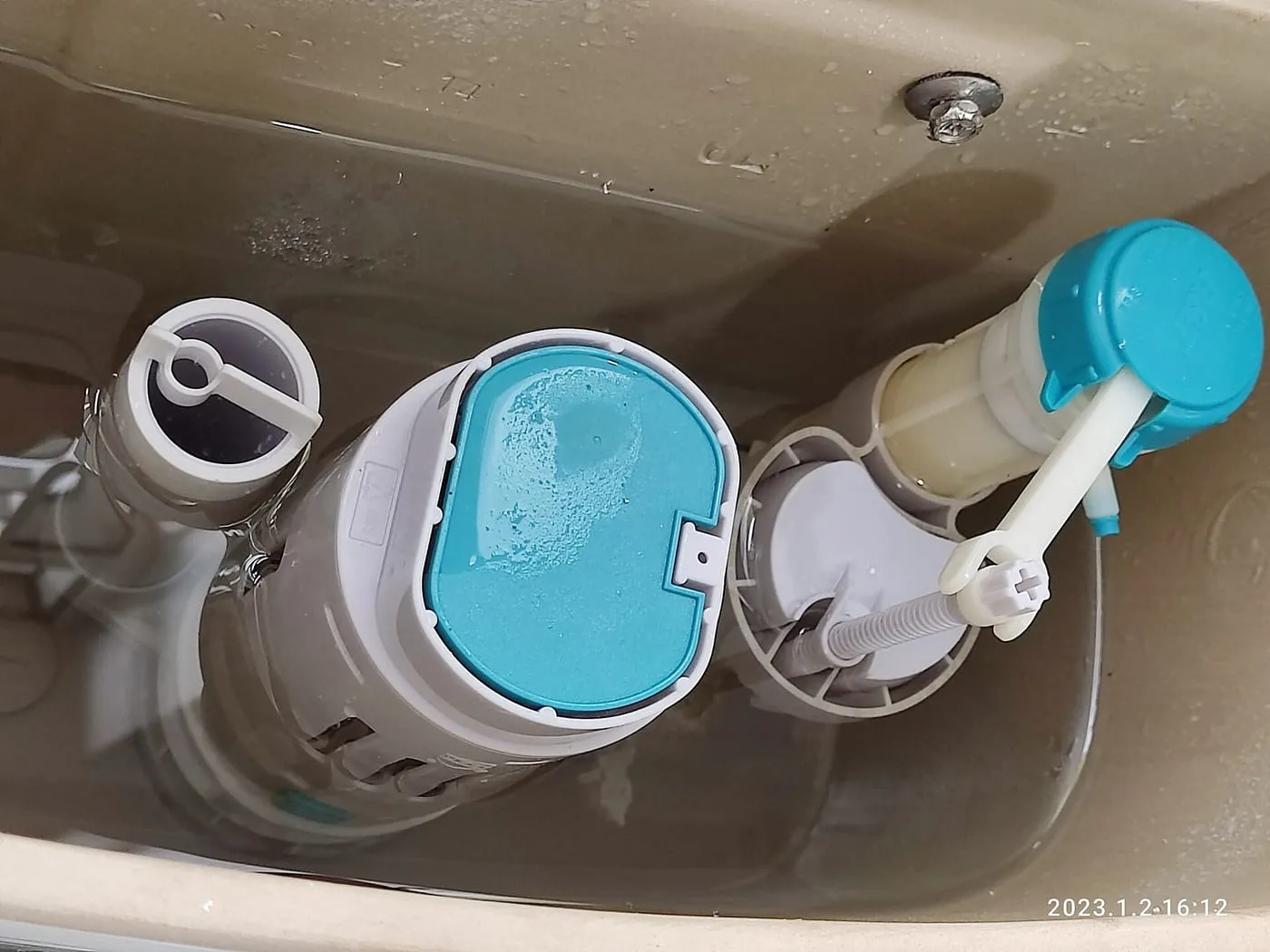

The three toilet failures behind 90% of callouts, and which ones are genuinely DIY.
A weak flush is usually a failed siphon diaphragm or scaled rim jets. A leak at the base means the pan connector or the fixing seal, not a cracked pan.
The endless run
A toilet that runs constantly is losing water over the overflow or past the flush seal. Lift the lid: water climbing towards the overflow tube means the fill valve; water level fine but running anyway means the flapper or drop valve seal. Both parts cost pounds and fit without tools beyond a spanner.
The weak flush
Check the rim jets for scale (a mirror helps), the water level against the marked line, and the flapper opening fully. In hard-water areas the jets scale shut over years, descaling transforms a flush more often than any new part.
Water at the base
A puddle at the base after flushing is the one to take seriously: usually the pan-to-soil seal, occasionally a cracked pan. Rocking the pan even slightly makes it worse. This one is worth a professional, because the failure mode of a DIY reseal is sewage under the floor.
A toilet that will not stop running
Either the fill valve is not shutting off, or the flush valve is leaking back into the pan. Put a little food colouring in the cistern and wait twenty minutes without flushing: colour in the pan means the flush valve. No colour, but the cistern keeps filling, means the fill valve. Both are inexpensive parts.
A wobbly pan
Never ignore it. Movement works the pan connector loose, and the resulting leak goes under the floor where it is found months later by the smell or the ceiling below. Refixing a pan properly, packed and sealed to the floor, not just screwed down harder, is a short job that prevents a substantial one.
Condensation on the cistern
Cold mains water in a warm humid bathroom, not a leak. It drips onto the floor and gets mistaken for one regularly. Better ventilation solves it; so does an insulated cistern liner. Confirm it first by drying everything and checking whether the water reappears without anyone flushing.
Diagnosing a running toilet in two minutes
Take the cistern lid off and look at the water level. If water is running into the overflow or the standpipe, the fill valve is not shutting off, the float has failed, been knocked out of adjustment, or the diaphragm inside has worn. If the level is correct and steady but water is still trickling into the pan, the flush valve seal or the siphon diaphragm is letting by.
What a running toilet actually costs you
A continuously running toilet passes roughly 200 to 400 litres a day. On an unmetered supply that is invisible. It is also the single most common reason a household water bill jumps without any change in habits, worth checking before assuming the meter is faulty.
Leaks at the base and what they mean
Water appearing at the foot of the pan only after a flush points at the pan connector, the flexible or rigid sleeve joining the toilet to the soil pipe. Those perish and can be replaced without removing the pan in most cases. A constant slow seep that is present regardless of flushing points at the supply connection to the cistern instead. Water between the cistern and the pan on a close-coupled unit means the doughnut washer has hardened, which needs the cistern lifted off, awkward, not expensive.
When a toilet genuinely needs replacing
Three cases justify it: a cracked pan, which cannot be repaired reliably and will eventually fail suddenly; an obsolete cistern where the internal parts are no longer manufactured, which is common on suites from the 1980s and early 1990s; and a change of style or layout. Everything else, running, weak flushing, leaking at a joint, a loose seat, a slow fill, is a part. If someone quotes a new suite without opening the cistern and looking, get a second opinion.
Questions people ask
Why does my toilet keep running?
Water is passing from the cistern into the pan continuously, which means either the fill valve is not shutting off or the flush valve seal is letting by. Both are inexpensive parts. Left alone, a running toilet wastes 200-400 litres a day, which is noticeable on a water meter.
Do I need a new toilet if it keeps running?
Almost never. Replacement is justified by a cracked pan, an obsolete cistern where parts are no longer made, or a style change. Anyone quoting a new suite for a running cistern without opening it first should be questioned.
Why is my toilet flush weak?
On an older cistern with a siphon, a split diaphragm is the usual cause and it is a cheap part. On a modern drop-valve cistern, it is the valve seal. Limescale blocking the rim jets under the bowl rim gives the same symptom in hard water areas.
Why is water leaking from the bottom of my toilet?
Usually the pan connector between the toilet and the soil pipe, or the seal where the cistern meets the pan on a close-coupled unit. Both are repairable. Water appearing only after a flush points at the connector; a constant slow seep points at the supply fitting.