
Toilet Not Flushing Properly? Work Through These
By Emergency Plumb,
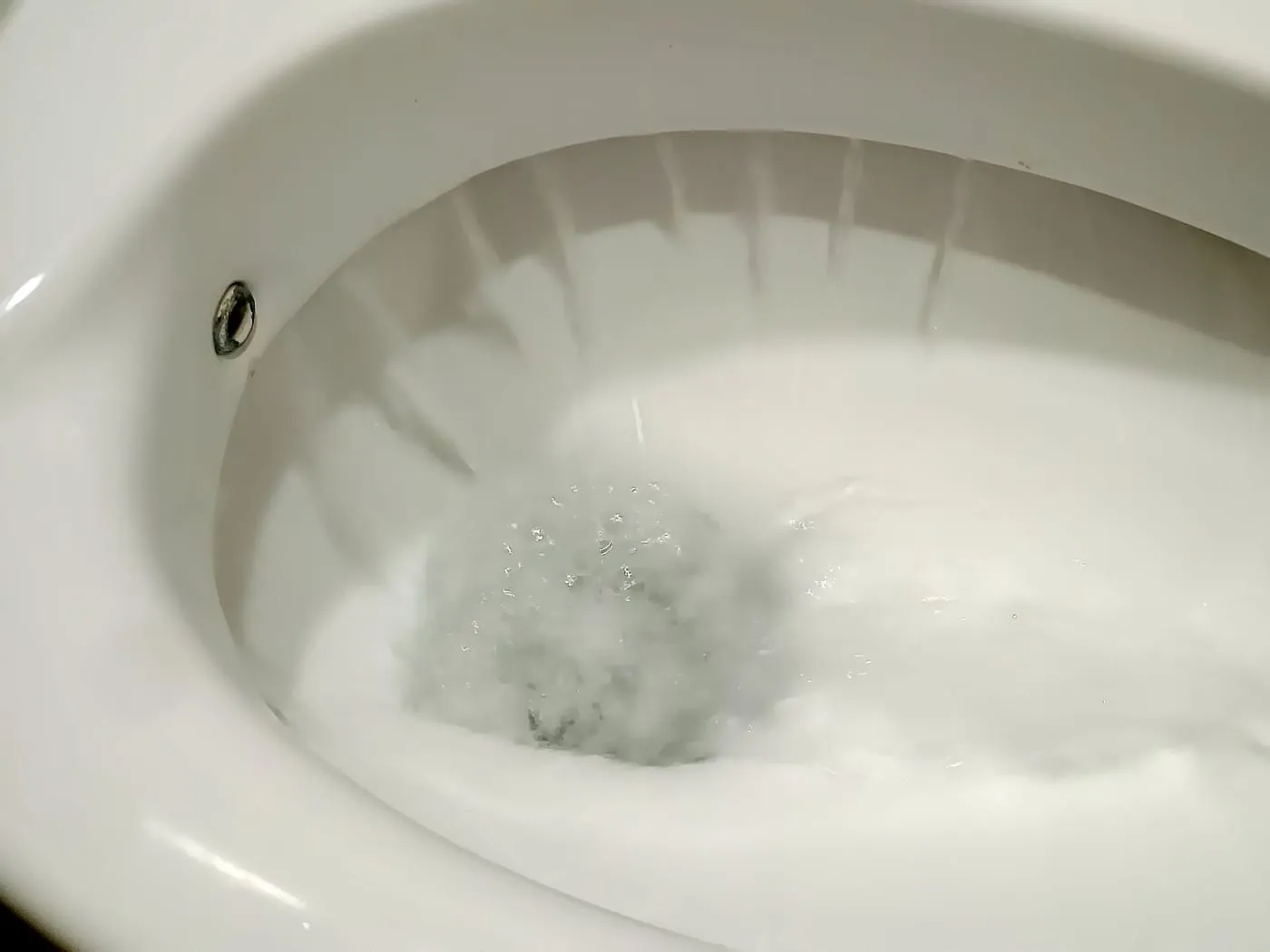
A weak or partial flush is nearly always the cistern mechanism or blocked rim jets, rarely the toilet itself.
Short answer: Check three things in order: the water level in the cistern, which should sit 10-20mm below the overflow; the flush mechanism, where a split siphon diaphragm is the classic UK failure; and the rim jets under the bowl, which scale up in hard water and make a working cistern look weak.
Check the water level in the cistern
Take the lid off and look. The water should sit roughly 10 to 20mm below the overflow. If it is well below that, the flush simply does not have enough volume behind it, and adjusting the fill valve to raise the level solves it outright. This is the single most common cause of a weak flush and it costs nothing to correct.
Siphon or flush valve, identify which you have
A lever handle almost always means a siphon; a push button on the lid means a drop valve. On a siphon, a weak or double flush is nearly always a split plastic diaphragm, which costs a few pounds and is the classic UK cistern failure. On a drop valve, a weak flush usually means the seal has perished or the valve is not lifting far enough, often because the chain or linkage has been set too slack.
Blocked rim jets, the cause nobody checks
Water leaves the cistern and enters the pan through small holes around the underside of the rim. In hard water areas like London, at 280 to 320 ppm, limescale gradually blocks these, so instead of scouring the whole bowl the water dribbles down one side. The flush looks weak but the cistern is working perfectly. A mirror and a torch will show you; descaling with a suitable limescale remover and a piece of wire restores it.
If the pan empties slowly instead
A flush that starts normally but drains sluggishly is not a cistern problem at all, it is a partial blockage in the trap or the branch beyond it. A flanged plunger clears most. If several fixtures are slow, or the toilet gurgles when a bath empties, the problem is further down the waste run and the toilet is just where you noticed it.
When it is the toilet itself
Rarely, and for specific reasons. Some budget short-projection and wall-hung pans have a genuinely poor flush design and never worked well. And a pan with an internal fracture or heavy scale build-up in the trapway will never flush properly regardless of the cistern. Both are replacements, but check the water level, the mechanism and the rim jets first, because those three account for the overwhelming majority.
Questions people ask
Why is my toilet flush weak?
Most often the cistern water level is too low, a siphon diaphragm has split, or limescale has blocked the rim jets so water dribbles down one side instead of scouring the bowl. All three are cheap fixes and none needs a new toilet.
Why does my toilet need flushing twice?
Classic split siphon diaphragm on a lever-handle cistern. The plastic membrane that lifts the water has torn, so the siphon loses its seal partway through the flush. A replacement diaphragm costs a few pounds.
How do I clean toilet rim jets?
Use a mirror and torch to look under the rim. Apply a limescale remover suitable for ceramics, leave it to work, then clear each hole with a piece of wire. In hard water areas like London this restores a flush that new cistern parts did not.
Do I need a new toilet if the flush is weak?
Almost never. Replacement is justified by a cracked pan, an obsolete cistern with no parts available, or a genuinely poor flush design on some budget wall-hung units. Check level, mechanism and rim jets first.