
How Water Moves Through a Building
By Emergency Plumb,
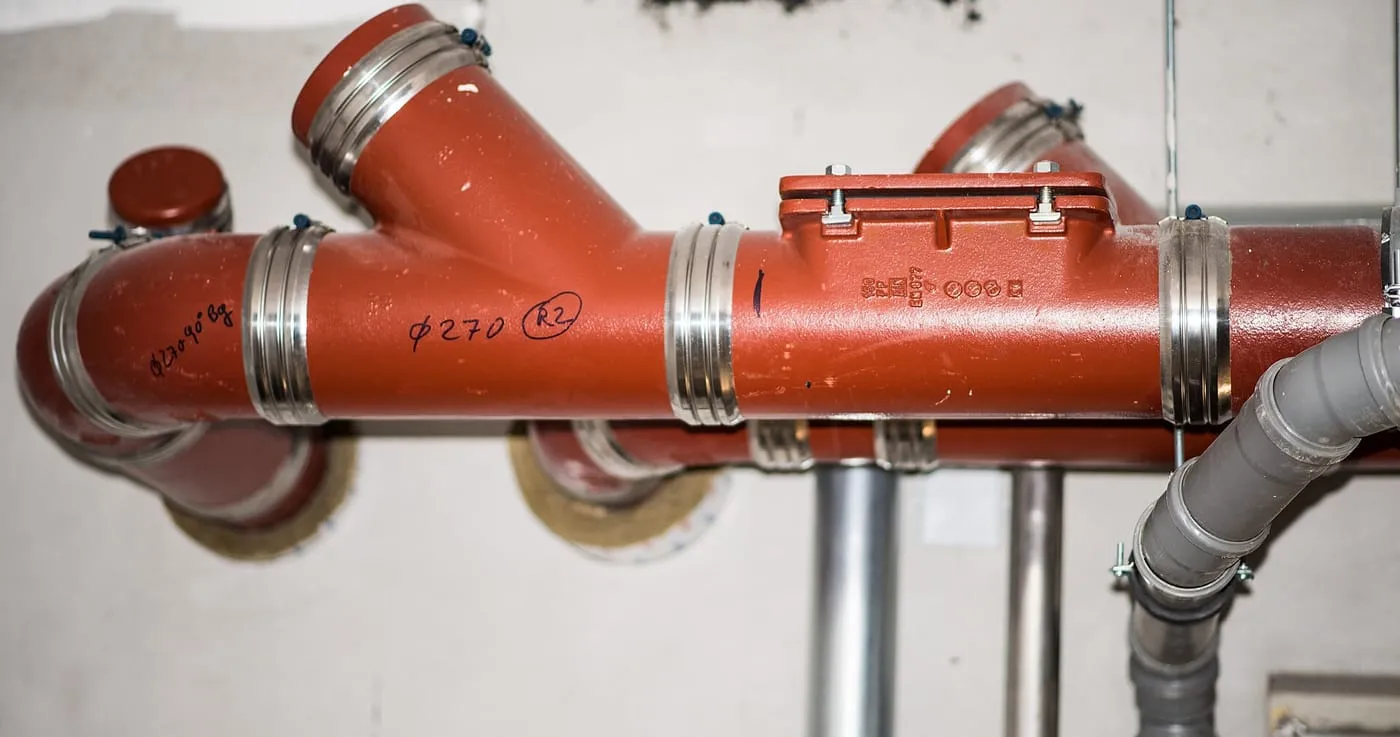
_(26462792964).jpg)
Supply up, waste down: understanding the two systems makes every plumbing decision easier.
Short answer: Cold water enters at the stopcock under mains pressure and either feeds outlets directly or fills a loft tank that feeds them by gravity. Hot water is either heated on demand by a combi or stored in a cylinder. Waste leaves by gravity through traps and a soil stack, which is why fall matters more than pressure.
The supply side
Mains pressure brings cold water in and either feeds everything directly (combi and unvented systems) or lifts to a loft tank that gravity-feeds the house. Which system you have decides your shower pressure, your fixes and your upgrade options.
The waste side
Everything drains by gravity to the soil stack, and the stack vents above the roof so falling water does not suck the traps dry. Every fitting keeps a water seal between your rooms and the sewer, which is why dry traps announce themselves by smell.
Why this matters to you
Half of plumbing misdiagnosis is treating a supply symptom with a waste fix or vice versa. Knowing which side of the wall the problem lives on is most of the way to the right trade, the right part and the right price.
Supply: mains, tank and pressure
Water arrives under mains pressure at your stopcock. In a direct system every cold outlet runs off that main. In an indirect system the main fills a loft tank and most outlets run from it under gravity, which is why the pressure upstairs is lower. Knowing which you have explains most pressure complaints without any investigation at all.
Waste: traps, branches and the stack
Every fixture drains into a trap holding a water seal, then into a branch, then into the soil stack, then underground. Falls are shallow and deliberate, too steep and the water outruns the solids, leaving them behind. That counterintuitive fact is behind a surprising number of blockages in retrofitted bathrooms.
Why all this explains your symptoms
A gurgle is air being pulled through a trap. Slow drainage across several fixtures is a shared branch. Weak hot but strong cold is a gravity hot supply and a mains cold. Once you can picture the route, most plumbing symptoms stop being mysterious and start telling you roughly where to look.
Questions people ask
What is the difference between mains-fed and gravity-fed plumbing?
Mains-fed systems take pressure directly from the street, so flow is strong and consistent at every outlet. Gravity-fed systems rely on the height of a loft tank, which typically gives around 0.1 bar per metre of drop - which is why an upstairs shower under a low tank dribbles.
Where is my stopcock likely to be?
Most commonly under the kitchen sink, then in a downstairs cloakroom, a utility room, or under the stairs. There is a second one outside near the boundary in a small covered chamber. Find and test both before you need them at 3am.
Why does my toilet gurgle when the sink drains?
Both are on the same waste run and air is being pulled through the toilet trap as water passes. It usually points at a partial blockage downstream or a restricted soil vent, not at the toilet itself.
Why do upstairs taps run slower than downstairs?
On a gravity system, upstairs outlets have less height between them and the loft tank, so less pressure. On a mains system, they should be similar - a big difference upstairs usually means a partly closed valve or a scaled-up section of pipe.